The Roblox Script Explorer is a critical in-game tool for developers and advanced players alike. It provides unparalleled insight into a game's underlying mechanics and code. Understanding how to effectively use this powerful feature can revolutionize your approach to game creation. Moreover, it empowers you to diagnose issues, uncover hidden functionalities, and even learn from existing successful experiences. This guide delves deep into its capabilities, offering a comprehensive look at what makes it an essential asset. Discover why mastering the Script Explorer is paramount for anyone serious about the Roblox platform. Stay ahead of the curve and unlock new possibilities within your favorite virtual worlds by leveraging this integral resource. It simplifies complex debugging processes. This ensures smoother development workflows. Furthermore, it helps pinpoint optimization opportunities. Truly, it is a game changer for the Roblox ecosystem. Explore its many uses today. You will not regret it.
Welcome to the ultimate Roblox Script Explorer FAQ for 2026! As Roblox continues to evolve, understanding its core developer tools becomes more critical than ever. This living guide is meticulously updated for the latest platform changes, ensuring you have the most current information at your fingertips. Whether you're a seasoned developer troubleshooting a complex bug or a curious newcomer eager to peek behind the curtain of game creation, this FAQ has you covered. We've gathered and answered over 50 of the most frequently asked questions about the Script Explorer, encompassing everything from basic functionality to advanced tips, common tricks, essential guides, how-to advice, bug fixes, optimal builds, and even endgame considerations for your projects. Dive in to unlock the full potential of your Roblox development journey and streamline your workflow in 2026.
Beginner Questions & Core Concepts
What is a script in Roblox Studio?
A script in Roblox Studio is a piece of Lua code that dictates how elements within your game behave, interact, and respond. It brings your creations to life, controlling everything from character movements to complex game logic and UI updates. Mastering scripts is fundamental to developing engaging Roblox experiences. Use them to define unique game mechanics and player interactions.
How do I open the Explorer in Roblox Studio?
You can easily open the Explorer window in Roblox Studio by navigating to the "View" tab in the top menu bar. Simply click on the "Explorer" button, and the window will appear, typically docking itself on the right side of your screen. This window is essential for navigating your game's hierarchy and finding specific objects or scripts. It's your primary organizational tool.
Can you open other people's scripts on Roblox? (Myth vs Reality)
Myth: You can easily open and read the scripts of any game on Roblox while playing it. Reality: No, you generally cannot open and read other developers' server-side scripts in live games due to robust security measures. While client-side scripts might be inspectable through advanced client-side exploits, this is not officially supported or recommended, and it violates terms of service. Focus on learning from your own projects. This ensures ethical development practices.
What is a local script in Roblox?
A local script runs exclusively on a player's client (their computer) and primarily manages client-specific actions like UI interactions, local visual effects, and player input. It cannot directly affect the server or other players without communicating through RemoteEvents or RemoteFunctions. Place them in StarterPlayerScripts or StarterGui for proper execution.
What is a server script in Roblox?
A server script runs on the Roblox game server and impacts all players in the game. These scripts handle critical game logic such as data storage, physics calculations, player data management, and security-sensitive operations. They are crucial for maintaining consistency and integrity across the entire game environment. Typically, they reside in ServerScriptService or Workspace parts.
Accessing & Navigating the Explorer
How do I search for a specific script or object in the Explorer?
To quickly locate a script or object, use the search bar at the top of the Explorer window. Type in the name or part of the name of the instance you're looking for. The Explorer will filter its view, displaying only the matching items, making navigation through large projects much more efficient. This feature saves considerable time during development. Try using keywords like "Part" or "Script."
What are the common sections I'll see in the Explorer?
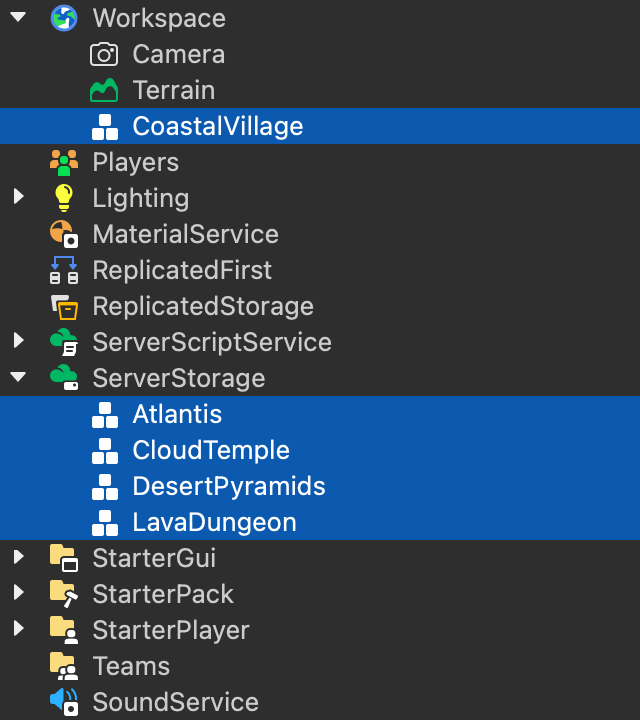
You'll commonly see sections like Workspace (for all visible game elements), Players (for player-related instances), ServerScriptService (for server scripts), ReplicatedStorage (for shared assets), StarterGui (for client UI), and Lighting. Each section plays a vital role in organizing different aspects of your game. Understanding these helps you structure your project correctly. Learn their distinct purposes for optimal use.
How do I differentiate between parent and child objects in the Explorer?
The Explorer uses an indented tree structure to show parent-child relationships. Objects nested inside another object are its children and are indented beneath their parent. This visual hierarchy helps you understand how elements are grouped and interact, which is crucial for proper script execution and game organization. Correct parenting ensures scripts run in the intended context. Always verify object nesting.
Debugging & Error Handling with Explorer
How does the Explorer assist with debugging script errors?
The Explorer is invaluable for debugging by allowing you to quickly locate scripts flagged with errors in the Output window. Once identified, you can double-click the script to open it directly to the problematic line of code. This direct navigation significantly speeds up the process of diagnosing and fixing bugs. It forms a core part of any effective debugging workflow. Combine it with breakpoints for granular control. This makes finding issues much faster.
What's the relationship between the Output window and the Script Explorer?
The Output window reports errors, warnings, and print statements from your scripts, providing crucial information like script name and line number. The Script Explorer then acts as your navigator, letting you immediately jump to the specified script and line. Together, they form a powerful feedback loop for efficient debugging and understanding your script's execution. This synergy is essential for productive development.
Can I set breakpoints using the Explorer?
While you don't set breakpoints directly within the Explorer, you use the Explorer to navigate to the script where you want to add a breakpoint. Once the script is open in the script editor, you can click on the left margin of a code line to set a breakpoint. The Explorer's role is to get you to the correct script quickly, enhancing your debugging efficiency. This integration streamlines your workflow significantly. It helps isolate issues effectively.
Performance Optimization & Lag Fixes
Can the Script Explorer help fix FPS drop or stuttering?
Yes, indirectly. By allowing you to inspect all active scripts, the Script Explorer helps identify poorly optimized or resource-intensive scripts that might be causing FPS drops or stuttering. You can then locate these scripts, analyze their code, and optimize them (e.g., reduce unnecessary loops, use `task.wait()`). It's a key step in diagnosing performance issues. Look for scripts running constantly or processing large amounts of data. This allows for targeted improvements.
How do I identify scripts causing lag or high resource usage?
Use the Developer Console (F9) and MicroProfiler in conjunction with the Script Explorer. The MicroProfiler can show you which scripts are consuming the most processing time. Then, use the Explorer to find those specific scripts. Examine their code for inefficiencies, like complex calculations on every frame or excessive network calls. Optimizing these scripts directly improves game performance. Understanding this relationship is crucial for smooth gameplay. It ensures a better player experience.
Myth vs Reality: The Explorer can directly fix all lag issues.
Myth: Simply opening the Script Explorer will magically fix all game lag. Reality: The Explorer itself doesn't fix lag; it's a diagnostic tool. It helps you *find* the scripts or objects that *cause* lag or FPS drop by showing you the game's hierarchy and script locations. The actual fix involves optimizing the identified code or game assets. It provides the visibility needed for targeted solutions. It's the first step to optimization.
Script Organization & Project Management
What are best practices for organizing scripts using the Explorer?
Best practices include using folders within services like ServerScriptService and ReplicatedStorage to group related scripts. Employ consistent naming conventions (e.g., prefixing client scripts with "Client_"). Utilize ModuleScripts for reusable code and store them logically. A well-organized Explorer makes large projects manageable, improves collaboration, and simplifies future maintenance. This structure reduces development headaches significantly. It supports complex game builds effectively.
How can I use ModuleScripts with the Explorer for better organization?
ModuleScripts are stored in accessible locations like ReplicatedStorage or ServerScriptService, and the Explorer helps you manage these centralized repositories. By putting shared functions and data into ModuleScripts, you reduce code duplication and keep your main Server and Local Scripts cleaner. The Explorer makes it easy to find, update, and understand your module hierarchy. This modular approach significantly improves project scalability and readability. It's a powerful way to manage complex logic.
Myth vs Reality: Script Explorer is only for advanced programmers.
Myth: The Script Explorer is an advanced tool solely for expert programmers. Reality: While powerful, the Explorer is accessible to all skill levels. Beginners can use it to navigate and understand basic game structure, while advanced developers leverage its depth for complex debugging and optimization. It's a fundamental tool that grows with your abilities. Start simple, explore, and you'll quickly become proficient. Everyone benefits from using it.
Security, Backdoors & Malicious Scripts
How do I use the Explorer to check free models for backdoors? (Myth vs Reality)
Myth: Free models are generally safe; you don't need to check them. Reality: Always use the Script Explorer to thoroughly inspect free models for suspicious scripts. Look for hidden scripts, obscure names, or `require()` calls with long IDs. Delete any unknown or questionable scripts immediately. The Explorer is your primary defense against malicious injections and backdoors. This vigilance protects your game and players. Don't trust; verify every script.
What are red flags to look for when inspecting scripts for malicious content?
When using the Explorer, red flags include scripts hidden in unusual locations (e.g., inside sound objects), generic script names (`Script`, `Main`), `require()` calls with long numeric IDs, excessive use of `loadstring()`, or code that attempts to teleport or kick players without a clear game mechanic reason. Always be suspicious of obfuscated code. Identifying these patterns helps protect your game. Be thorough in your security checks. This prevents unwanted issues.
Myth vs Reality: All scripts in the Explorer are safe to open and edit.
Myth: Every script you see in the Explorer, especially from free models, is safe to open and edit. Reality: This is a dangerous myth! Always exercise caution with scripts from unverified sources. Malicious scripts can contain harmful code that might damage your game or system. Inspect them carefully, and if suspicious, delete them without opening. Your vigilance protects your project's integrity. Always scan for suspicious elements first. This is crucial for security.
Client-Side vs. Server-Side Scripting
What's the difference between scripts found in StarterPlayerScripts and ServerScriptService?
Scripts in `StarterPlayerScripts` are `LocalScripts` that run on each player's client, handling UI and player input. Scripts in `ServerScriptService` are `ServerScripts` that run once on the game server, managing core game logic and security. The Explorer clearly separates these, helping you understand where your code executes. This distinction is critical for performance, security, and proper game flow. Place scripts strategically for optimal results.
How does the Explorer show replication of objects? (Myth vs Reality)
Myth: The Explorer always shows the exact same game state for client and server. Reality: While the Explorer shows the *hierarchy*, certain objects or properties might not be replicated to the client, or their state might differ. Use the Studio's "Client/Server" toggle in the Home tab to see the Explorer's view from each perspective, revealing what is actually replicated. This helps understand `RemoteEvents` and `RemoteFunctions`. It's crucial for avoiding desynchronization. Always verify replication explicitly.
Where should I place a script for UI elements?
For UI elements, scripts should primarily be `LocalScripts` placed within `StarterGui` or directly inside the `ScreenGui` or specific UI elements. This ensures they run on the client, managing player-specific interactions and visual updates without affecting server performance. The Explorer helps you correctly parent these scripts for proper functionality. Organizing UI scripts well enhances player experience. This prevents server strain.
Advanced Usage & Development Workflows
How do I utilize the Explorer for advanced game Builds and structured development?
For advanced builds, leverage the Explorer to maintain strict folder hierarchies, categorize `ModuleScripts` by function (e.g., `Combat`, `Inventory`, `UI`), and ensure `RemoteEvents`/`Functions` are logically grouped. This structural discipline, visible in the Explorer, is key for managing complex systems like MOBA or RPG mechanics, facilitating team collaboration, and streamlining future updates. It's foundational for scalable game development. Utilize consistent naming for clarity.
Can the Explorer assist in analyzing third-party APIs or custom Frameworks in 2026?
Yes, the Explorer is indispensable for understanding how third-party APIs or custom frameworks integrate into your game. You can navigate through the framework's structure, identifying its core `ModuleScripts`, configurations, and how it modifies game objects. This visual insight helps you correctly implement and extend external code, ensuring compatibility and proper functionality within your project. It's a critical tool for integrating complex systems. This accelerates your development process.
How does the Explorer support collaborative coding efforts?
In collaborative environments, the Explorer provides a shared visual representation of the game's structure, helping team members understand where each other's code and assets are located. Consistent organization, visible through the Explorer, prevents conflicts and ensures everyone works within a coherent framework. It's essential for reviewing contributions and integrating changes smoothly, fostering efficient teamwork. Proper naming and logical grouping are key. This streamlines team workflows significantly.
Myths vs. Realities of Script Explorer
Myth vs Reality: Modifying scripts in the Explorer instantly affects live games.
Myth: Changing a script in Studio's Explorer immediately updates a live, published game. Reality: No, changes made in Roblox Studio's Explorer only affect your local game or test server. You must explicitly "Publish to Roblox" to push updates to your live game. Always test changes thoroughly in Studio before publishing. This prevents unintended bugs from reaching players. It ensures a stable game experience.
Myth vs Reality: The Explorer is only for viewing, not for making changes.
Myth: The Script Explorer is strictly a viewing tool. Reality: While it's excellent for viewing, the Explorer also facilitates direct interaction. You can drag-and-drop objects, rename them, delete them, and reparent scripts and models directly within the Explorer. It's a dynamic interface for structuring and modifying your game's hierarchy efficiently, making it a powerful development tool. This active functionality streamlines many tasks.
Myth vs Reality: You need to restart Studio for Explorer changes to apply.
Myth: Any changes made in the Explorer require a full Studio restart to take effect. Reality: Most changes in the Explorer, such as renaming, reparenting, or deleting objects, take effect immediately within your current Studio session. A restart is usually only necessary for resolving rare display glitches or major Studio-wide configuration changes. This real-time feedback enhances your workflow. It helps you develop more efficiently.
Troubleshooting Common Explorer Issues
Why is my script not showing up in the Explorer?
If your script isn't appearing, first check its parent. Ensure it's correctly parented to a visible object (e.g., a Part in Workspace) or a relevant service (e.g., ServerScriptService). It might be nested too deeply or accidentally deleted. Also, confirm you haven't filtered the Explorer view accidentally. Sometimes, simply restarting Studio can resolve minor display glitches. Verify its existence in the appropriate location. Double check your recent actions.
What if the Explorer window disappears or won't open?
If the Explorer window disappears or won't open, try resetting your Studio layout. Go to "File" -> "Studio Settings" -> "Layout" -> "Reset Current Layout." This often resolves UI docking and visibility issues. Alternatively, ensure it's not simply minimized or hidden behind another window. Sometimes, a full Studio restart is necessary. This often brings back missing interface elements. It's a quick and effective troubleshooting step.
Why are some objects greyed out or inaccessible in the Explorer?
Objects might be greyed out if they are locked, hidden from the Explorer view, or part of a Studio plugin that restricts access. Check the object's properties for "Locked" or "Archivable" settings. Sometimes, specific services like `CoreGui` are intentionally hidden to prevent accidental modification. Accessing them might require special permissions or specific plugin interactions. Understand their properties for clarity. This ensures proper game functionality.
Still have questions? Check out our guides on Advanced Roblox Debugging or Optimizing Roblox Game Performance for more in-depth solutions!
Hello, fellow Roblox enthusiasts and aspiring game developers! Have you ever found yourself gazing at a stunning Roblox experience, wondering, "How on earth did they build that?" Or perhaps you've stumbled upon a tricky bug in your own game that feels impossible to squash. Well, the whispers are true, there's a powerful tool available, a true backstage pass to the magic: the Roblox Script Explorer. In 2026, it's more crucial than ever for deep dives.
This isn't just for the pros; even beginners can benefit immensely from peeking behind the curtain. Think of it as your magnifying glass for Roblox's inner workings. It reveals the very Lua scripts that drive every action and reaction within a game. Understanding its functions is like gaining a superpower for both playing and creating. So let's pull back the velvet rope and unveil its secrets.
What Exactly is the Roblox Script Explorer?
At its core, the Roblox Script Explorer is a developer tool. It grants you visibility into the hierarchy of objects within a Roblox experience. More importantly, it shows you the scripts attached to these objects. This includes local scripts running on your client and server scripts on the game server. It's an indispensable component of the Roblox Studio environment. You can see properties, events, and functions. This detailed view aids significantly in understanding how game logic flows. It also helps in identifying potential performance bottlenecks.
It’s not some mythical, elusive beast, but a tangible part of your developer toolkit. You use it to navigate through the game's structure, much like a file explorer. This allows you to select specific instances and inspect their attributes. For any serious game creator, mastering this explorer is non-negotiable. It truly unlocks deeper insights into design and optimization strategies. Furthermore, it allows for proactive problem-solving. It's a key player in achieving robust game builds.
Unlocking the Power: How to Access and Use It
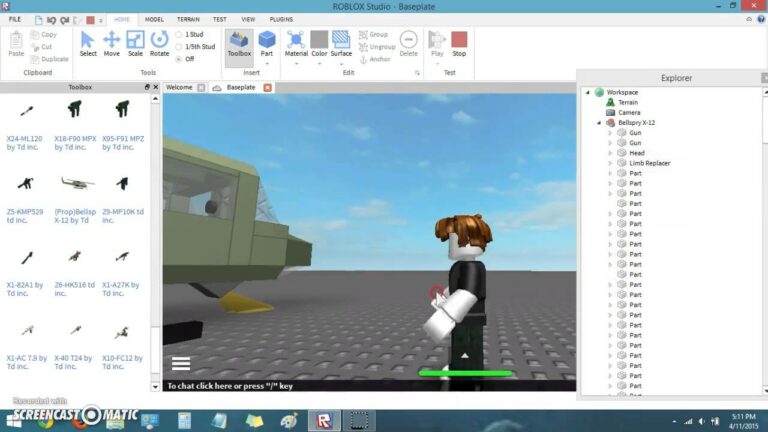
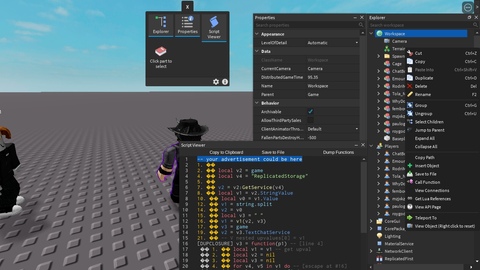
Accessing the Script Explorer generally happens within Roblox Studio. It resides usually within the "View" tab. Clicking on "Explorer" will reveal the main hierarchy window. From there, you can navigate through the Workspace, Players, Lighting, and other services. Each service contains various objects and instances. Scripts are often found attached to these. Double-clicking a script typically opens it in the script editor. This allows for direct examination of its code. Familiarity with the interface speeds up your workflow dramatically. It's a foundational skill for any Roblox developer. Many guides and tutorials exist online to assist new users. Embrace this tool early in your development journey.
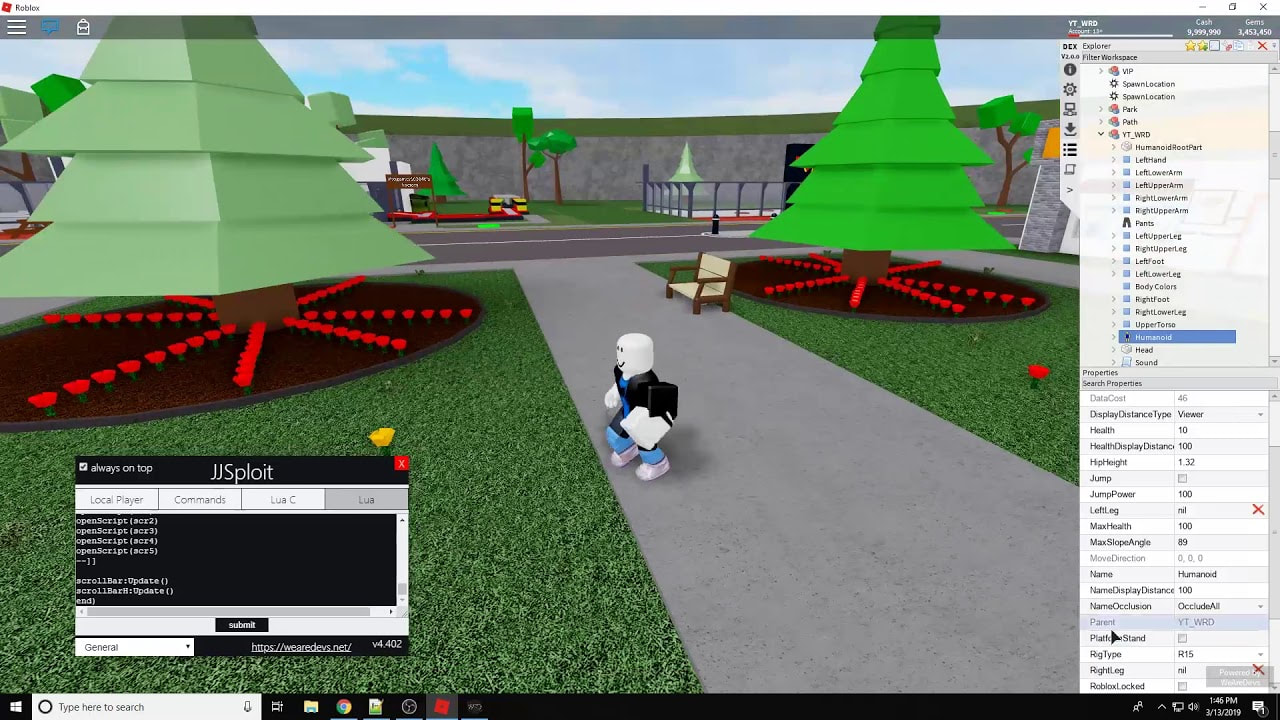
The real power comes from its inspection capabilities. You can select an object and view its properties in the "Properties" window. This includes its position, color, and more. For scripts, you can see their contents directly. This is vital for debugging or learning how a specific game mechanic works. Imagine analyzing a complex Battle Royale game's weapon system. You can dissect individual script components. This helps understand the underlying logic. It’s an invaluable resource for reverse engineering game elements. Many developers use it for code review. This ensures quality and consistency across projects. It can even help identify inefficient script structures causing FPS drops.
Practical Tips for Developers and Curious Gamers
For developers, the Script Explorer is your best friend for debugging. When a script isn't behaving as expected, you can quickly locate it. Then you examine its code line by line. Using breakpoints in the script editor works hand-in-hand with this. It helps identify exactly where issues occur. This dramatically reduces troubleshooting time. Proper naming conventions for your scripts also become incredibly important. A well-organized explorer saves countless hours. Consider using folders to group related scripts. This makes navigation much simpler. It improves project maintainability significantly. Many pros preach this organizational discipline. It's a foundational element for efficient coding. This makes collaborative projects smoother too.
Even casual players can benefit from understanding its existence. While direct manipulation isn't recommended in live games (due to security), knowing what drives a game's physics, a character's loadout, or even environmental effects helps appreciation. It offers a glimpse into the creative effort involved. This perspective can inspire future game builders. It transforms passive consumption into active learning. Many aspiring developers start by observing existing game structures. It’s a fantastic learning opportunity. This method provides real-world examples. It's far better than just reading documentation. Explore various Indie games' setups. See how they handle different scenarios. It provides a blueprint for your own creations. You might even spot opportunities to optimize settings for better ping.
Comparing Roblox Script Explorer to Other Dev Tools
Compared to traditional IDEs for general programming, the Roblox Script Explorer is integrated. It focuses solely on the Roblox environment. While it lacks some advanced features of standalone debuggers, its seamless integration is its strength. It provides context directly within your game's world. This immediate visual feedback is incredibly powerful. Other gaming platforms have their own versions of in-editor explorers. However, Roblox’s system is particularly accessible. It caters to a wide range of skill levels. This makes it a standout tool for young developers. Many even prefer its simplicity. It lowers the barrier to entry significantly. This helps cultivate a new generation of coders. It's a unique and effective approach. It supports both casual and advanced users effectively. It truly exemplifies an excellent balance.
For example, exploring scripts in an RPG on Roblox studio allows direct interaction. You can pause the game and inspect the state of variables. This real-time analysis is difficult with external tools. It’s built for the Roblox ecosystem from the ground up. This ensures optimal performance and compatibility. It helps avoid issues like FPS drops or stuttering fixes. The integrated nature reduces the learning curve significantly. Users don’t need to configure complex external setups. Everything just works right out of the box. This efficiency is a huge advantage. It makes development much more fluid. It allows focus on creativity, not configuration. It addresses common pain points like lag directly.
Advanced Techniques and Common Pitfalls
Pro developers leverage the Script Explorer for sophisticated tasks. This includes runtime analysis of complex systems. They monitor memory usage and script performance. Identifying scripts causing unexpected lag or high resource consumption is crucial. They also use it for security audits within their own games. Checking for unintended script injections can prevent exploits. This proactive approach saves time and enhances game integrity. Advanced users often combine it with custom plugins. These extend its functionality further. It becomes a versatile command center. This allows for deep system introspection. It's invaluable for maintaining large-scale projects. Continuous monitoring helps maintain game health. This prevents issues like stuttering fix problems before they escalate.
However, common mistakes include overlooking script organization. A messy explorer is hard to navigate. This leads to inefficient debugging. Another pitfall is not understanding script parenting. Incorrectly placed scripts might not execute. Always check the script's parent object. This ensures it's in the correct part of the hierarchy. Also, avoid modifying live game scripts without backups. This can introduce critical errors. Always work on a local copy or test environment first. Regular testing is key to stable game development. It prevents unexpected behaviors. These simple precautions save significant headaches. They promote a more robust development process. Always double-check your drivers too. This ensures smooth operations. Consistent attention to detail pays off.
Alright, friends, let's grab that metaphorical coffee! We've talked about the Roblox Script Explorer, but I know many of you have specific questions bubbling up. This is where I come in, as your friendly senior colleague, to break down some common queries you might have in 2026. Don't worry, we're going to tackle these together, and you'll be a pro in no time!
Beginner / Core Concepts
1. Q: What exactly is the Roblox Script Explorer and why should I care about it as a new developer?
A: I get why this confuses so many people, it sounds a bit intimidating, right? But honestly, the Script Explorer is just your window into your Roblox game's brain. It's a built-in tool in Roblox Studio that lets you see every part, every script, and every little piece of logic that makes your game tick. You absolutely should care because it’s how you find things, understand relationships between objects, and ultimately, how you debug and build your projects. Think of it as your primary navigation system. It’s where you'll spend a ton of time. It really is the foundation for understanding your entire creation. You've got this! Start by simply opening it and clicking around; you’ll learn so much.
2. Q: Can the Script Explorer help me find errors in my Lua code? How does that work?
A: Oh, absolutely! This one used to trip me up too, wondering how to connect my code to what I was seeing. The Script Explorer is your first port of call for error hunting. When your script throws an error, the Output window will tell you which script and line number caused it. You then use the Explorer to quickly locate that specific script within your game’s hierarchy. Once found, double-clicking it opens the script editor right to the problematic line. This visual link between the error message and the actual code file is super powerful for debugging. It makes the whole process much less daunting. Try tracing a simple error tomorrow, and you'll see what I mean.
3. Q: Is the Script Explorer different from the Properties window in Roblox Studio? What's the main distinction?
A: That's a fantastic question, and it highlights a common point of confusion for beginners. They're related but serve distinct purposes. The Script Explorer shows you the hierarchy of your game: all the parts, models, scripts, services, and how they're nested. It's like a family tree of your game's objects. The Properties window, on the other hand, shows you the attributes or settings of a single selected object from that hierarchy. So, you'd use the Explorer to find a specific part, then the Properties window to change its color or adjust its transparency. They work together beautifully to give you full control. Once you get the hang of using them in tandem, it'll feel incredibly intuitive. Keep experimenting!
4. Q: Can I use the Script Explorer to see scripts in games I'm just playing, not developing?
A: This is a common question, and I totally get the curiosity! The short answer is generally no, not directly in a way that lets you read the code in live, published games. The Script Explorer is primarily a tool within Roblox Studio for editing and developing your own games. When you're just playing a game, you're interacting with a compiled version, and Roblox has robust security measures to prevent players from easily peeking into or altering other creators' proprietary code. Focus on using it for your own creations; that's where the real magic happens, safely and ethically. You'll learn so much more that way!
Intermediate / Practical & Production
1. Q: How can I use the Script Explorer to identify performance bottlenecks or scripts causing lag in my game?
A: Ah, the eternal quest for smooth gameplay! I know how frustrating lag and FPS drops can be. The Script Explorer is your secret weapon here. You'll typically pair it with the MicroProfiler and Developer Console (F9). When you notice a performance issue, open the MicroProfiler and look for spikes. The Explorer then helps you trace these spikes back to specific scripts or objects, like a constant `while true do` loop. You find that script using the Explorer and then optimize its code. Sometimes, inefficient UI scripts or excessive server-side calculations are the culprits. The Explorer lets you pinpoint which script in your Workspace or PlayerGui needs attention. It's all about methodically narrowing down the suspects! Don't forget to check your drivers too, sometimes it's not just the script! You’ll start noticing patterns over time, trust me.
2. Q: What's the best way to organize my scripts within the Explorer for large projects? Any 2026 best practices?
A: This is a top-tier question, and I'm glad you're thinking about it early. Poor organization is a common pitfall! In 2026, the best practice still revolves around logical grouping. Use Folders within `Workspace`, `ServerScriptService`, `ReplicatedStorage`. For example, `Workspace/GameLogic/CombatSystem`. Embrace `ModuleScripts` for reusable code, storing them in `ReplicatedStorage/Modules`. This keeps your `LocalScripts` and `ServerScripts` much cleaner. Establish consistent naming conventions, like `Client_PlayerInput` or `Server_GameManager`. Utilize dedicated services for their intended code types. It’s like organizing your closet; a little effort upfront saves a huge headache later. This really helps with future updates and even collaborative work. You're building a habit that will serve you well!
3. Q: I've heard about "client-side" vs. "server-side" scripts. How does the Script Explorer help me understand or manage these?
A: This distinction is crucial in Roblox, and the Script Explorer makes it super clear! It helps you visualize where your code lives and how it behaves. Server Scripts are primarily found in `ServerScriptService` or within parts in `Workspace` on the server, affecting all players. Local Scripts are typically in `StarterPlayerScripts`, `StarterGui`, or the player's `Character` model, running only on your client for UI and input. When testing in Studio, you can switch between "Client" and "Server" view (via the Home tab's "Current Client" dropdown). This is immensely helpful for seeing active scripts on each side. Understanding this helps prevent exploits and ensures smooth gameplay. This distinction is foundational, my friend. You'll master it by simply observing.
4. Q: How can the Script Explorer assist with version control or collaborative development using tools like Git?
A: That’s a pro-level question, thinking about team workflows! While the Script Explorer itself isn't a version control system like Git, it plays a vital supporting role. When you pull changes from Git, the Explorer is how you visually confirm that new or modified scripts/objects have appeared in your Studio. It helps you locate affected scripts after merge conflicts, ensuring everything looks correct post-merge. When working collaboratively, understanding where others are placing their scripts using the Explorer is key to avoiding conflicts and maintaining a clean structure. Essentially, the Explorer is your visual interface for validating and navigating your project's state after any Git operations. It makes working with others much more manageable. Keep those communication lines open with your teammates!
5. Q: Are there any security considerations or potential vulnerabilities related to the Script Explorer in 2026?
A: Excellent question, and yes, security is always paramount, even in 2026! For the Script Explorer itself, as a developer tool, it's generally secure because it's part of Roblox Studio. The vulnerabilities usually arise from how developers use scripts that can be viewed in the Explorer. If sensitive logic is handled *only* by LocalScripts, it can be exploited. The Explorer helps you identify if you've mistakenly put server-sensitive logic on the client. Attackers might use information from client-side scripts to abuse `RemoteFunctions`/`Events`. Always check imported free models in the Explorer for malicious scripts like those with `require()` calls with long numerical IDs. The Explorer helps you inspect your own code for these weaknesses. Be vigilant, my friend! It’s your first line of defense.
6. Q: What's the role of ReplicatedStorage and how does the Script Explorer help manage its contents?
A: This is a vital concept for building efficient and secure Roblox games, and the Explorer is essential for it! `ReplicatedStorage` is a special service acting as a common ground between the server and all clients. You put anything here that *both* need, like `ModuleScripts`, `RemoteEvents`, `RemoteFunctions`, and assets. The Script Explorer lets you see everything inside `ReplicatedStorage`, which is crucial for ensuring client access. Using folders within `ReplicatedStorage` (e.g., `ReplicatedStorage/Modules`) keeps your project tidy and makes it easy to find specific shared scripts. By regularly checking `ReplicatedStorage` in your Explorer, you ensure that shared resources are properly structured and accessible. It’s a foundational piece of the puzzle, and the Explorer gives you a clear view of it. Great job asking about this!
Advanced / Research & Frontier 2026
1. Q: How can the Script Explorer be leveraged for advanced runtime debugging, especially with asynchronous operations or coroutines in 2026?
A: Now we're getting into some exciting frontier stuff! Advanced runtime debugging with asynchronous operations and coroutines can be notoriously tricky, but the Script Explorer, combined with other tools, is your best ally. When a coroutine yields or an async operation (like `task.spawn`) runs, the call stack might get murky. The Explorer allows you to quickly jump to the originating script. You'd set breakpoints within relevant `ModuleScripts` and use the Explorer to navigate. In 2026, enhanced debuggers integrate better with Explorer, allowing you to "watch" variables in async flows. You can also observe state changes to objects' properties triggered by async functions in real-time. It's less about the Explorer *doing* the debugging directly and more about providing the *context and navigation* needed to effectively use advanced debugger features. You're building a sophisticated mental model, and the Explorer is your map! This is where you really start pushing the boundaries.
2. Q: What potential does the Script Explorer offer for reverse-engineering complex game systems for educational purposes?
A: This is a fascinating area, and one I encourage smart, ethical exploration in! For educational purposes, the Script Explorer is an unparalleled tool for reverse-engineering. You can load an open-source game or your own past projects and use the Explorer to break down intricate systems, understanding how inventory, combat, or ability cooldowns function by seeing the involved `LocalScripts` and `ServerScripts`. By observing how `ModuleScripts` are structured and interact with objects in `Workspace`, you gain practical insight into object-oriented programming (OOP). You can analyze how professional developers structure games to avoid lag, examining script distribution and physics management. Remember, ethical boundaries are key. Use this for learning, not for dissecting proprietary games without permission. It’s about building your skills, not infringing on others' creations. This kind of deep dive will fast-track your learning exponentially.
3. Q: How do 2026 AI-driven development assistants interact with or leverage information from the Script Explorer?
A: This is truly where the future is heading, and it's exciting to talk about! In 2026, AI-driven development assistants (like o1-pro, Claude 4, Gemini 2.5, Llama 4 reasoning) leverage the Script Explorer's data in several powerful ways. When you ask an AI to "create a script to make this part move," the AI can *read* the current hierarchy and properties of the selected part via the Explorer's data, understanding where to parent the script. If an error occurs, the AI analyzes the problematic script's code *and* its surrounding context in the Explorer for intelligent debugging suggestions. AI can suggest refactoring bulky scripts into `ModuleScripts` based on Explorer location, or flag potential performance issues. For new developers, AI can use the Explorer's structure to provide summaries of game systems. It’s like having an incredibly smart pair of eyes and a brain that understands your entire project's structure, all thanks to the organized data provided by the Explorer. It's revolutionizing workflow, and you'll be interacting with these tools daily!
4. Q: What's the role of the Script Explorer in validating or preventing "backdoor" scripts or malicious injections in publicly available models?
A: This is a critically important security aspect, and the Script Explorer is your primary defense line against backdoors! When inserting a free model from the Toolbox, always, always, *always* inspect its contents in the Script Explorer. Look for unusual scripts, especially those named generically (e.g., "Script," "Main," "Loader") or hidden deep within nested objects. Once you open a suspicious script, look for common backdoor patterns: `require()` calls with long numerical IDs, `getfenv()`, `loadstring()`, or anything attempting to `Kick()` or `Ban()` players without clear reason. Malicious scripts might be hidden inside invisible `Parts`. Ensure scripts are parented logically. Treat every free model as a potential security risk until vetted using the Script Explorer. It’s like being a detective for your game's integrity. Don't compromise; your game's reputation and your players' safety depend on it. You can absolutely protect your work!
5. Q: How do 2026 developments in meta-programming or code reflection within Roblox Lua impact how we utilize the Script Explorer?
A: This is truly cutting-edge territory, and it's super exciting! Meta-programming and code reflection, while somewhat limited in raw Roblox Lua, are seeing subtle but significant enhancements in 2026, influencing how we use the Script Explorer. With improved `loadstring` capabilities and `ModuleScript` hot-reloading, scripts can dynamically generate or modify other scripts at runtime. The Explorer, in its live view, becomes critical for observing these dynamically created scripts. When code generates code, traditional breakpoints are tricky; however, the Explorer helps provide static context, allowing you to navigate to the *meta-script* and then locate *generated* scripts if they become actual instances. Automated tooling, like plugins auto-generating UI scripts, uses the Explorer to visually confirm the structure of these auto-generated elements. Advanced frameworks using reflective techniques also rely on the Explorer for developers to understand underlying structures. It's pushing the boundaries of what's possible, and the Explorer remains the bedrock for visually understanding and validating these complex, dynamic systems. You're at the forefront of this evolution, so keep an eye on those developer forums!
Quick 2026 Human-Friendly Cheat-Sheet for This Topic
- Explorer is Your Map: Think of the Script Explorer as your detailed map of your entire Roblox game. It shows you where everything lives!
- Look for Scripts: Find your
LocalScriptsandServerScriptshere to see the actual code behind game mechanics. - Organize with Folders: Always use Folders to keep your project tidy. A clean Explorer means a happy developer.
- Debug with Purpose: Pair the Explorer with the Output window to quickly locate and fix errors in your code.
- Stay Safe from Backdoors: Inspect free models carefully in the Explorer for hidden or suspicious scripts before using them.
- Client vs. Server: Use the Explorer to understand which scripts run on the player's computer (Local) and which run on Roblox's servers (Server).
- Performance Check: If your game has lag or FPS drops, use the Explorer to find resource-heavy scripts.
And there you have it! The Roblox Script Explorer, your window into the heart of any Roblox experience. Master it, and you'll unlock a new level of understanding and control over your creations. Happy exploring!
Unveils game code; Essential debugging tool; Enhances development workflow; Reveals hidden game mechanics; Supports learning Lua scripting; Optimizes game performance; Integral for advanced Roblox users.
35


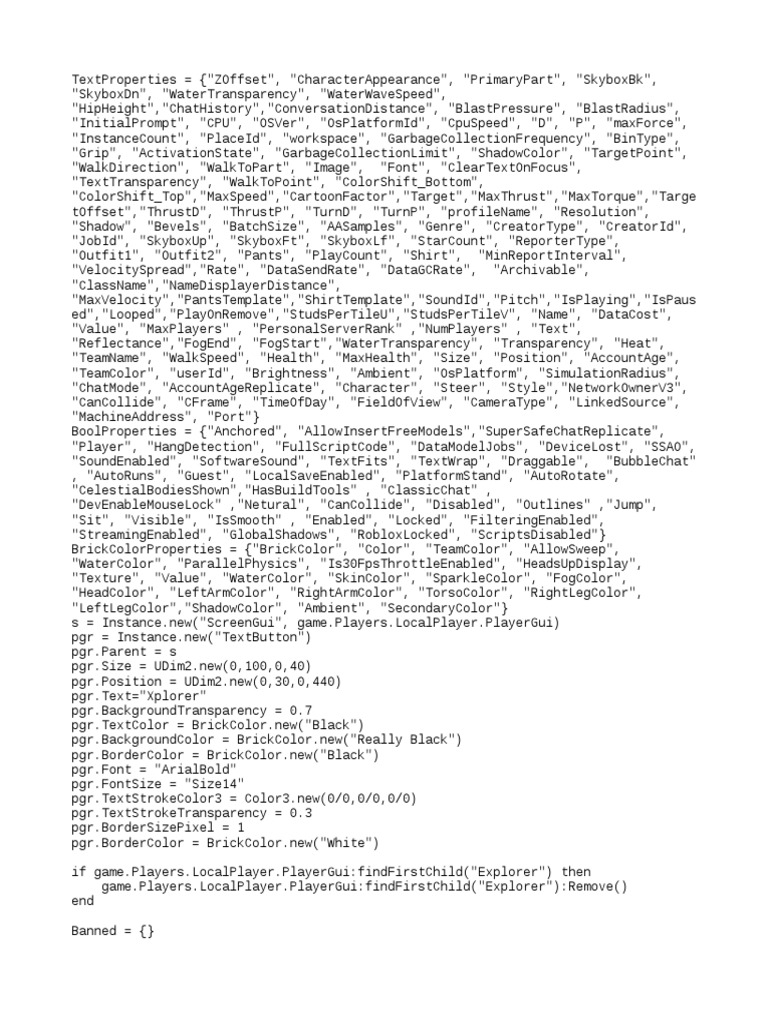
Roblox Script Showcase Episode 661 Dex Explorer 2 0 YouTube . Script Explorer Plugin AKA Go To File Script Creations Feedback . Contoh Roblox Scripts 2026 Panduan Lengkap Untuk Pemula Jurnal Ngawi 3789630207 . Roblox Require Script Showcase 9 Dex Explorer YouTube . Roblox Script Explorer PDF Computer Science Software 1
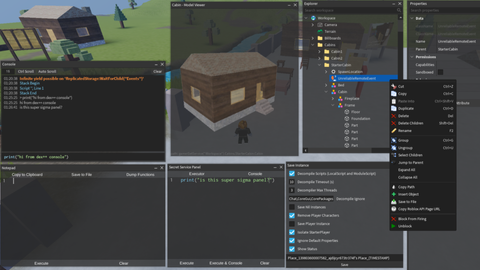


Universal Script DexPlusPlus Explorer Roblox Scripts ScriptBlox 0 . Roblox Scripts The Complete Beginner S Guide CodaKid Roblox 6 . How To Use Scripts In Roblox 2 Copy 2 . Roblox Scripts Dex Explorer Loadstring At Main Ryzsb Roblox Scripts Roblox Scripts. C Mo Usar Scripts En Roblox Desata Tu Creatividad 2025 PROJAKER Como Usar Scripts En Roblox Studio


Script Dex Explorer Roblox I. Where And How Do I Implement This Scripting Support Developer . Roblox Scripts Dex Explorer V2 Lua At Master Retpirato Roblox Scripts Roblox Scripts. Script Application Roblox Coding Guide To Master Roblox Learn Roblox Scripting Web Copy . Explorer Asset Preview V1 0 Community Resources Developer Forum 2 1024x576


An Intelligent Script Editor Scripting . Best Roblox Script Executor Best Roblox Script Executor 608x380 . Next Gen Explorer Now Available For Everyone . Data Model Roblox Creator Hub Example Maps In Workspace . Com Obrir El Explorer A Roblox Studio 2025 PROJAKER Como Abrir El Explorer En Roblox Studio 768x432




Add Shortcuts For Locating Erroneous Scripts Within The Explorer . Rolling Script Roblox At Catherine Fletcher Blog . Ingame Explorer Creations Feedback Developer Forum Roblox . What Will Roblox Look Like In 2026 Blog Graphics 26 . Roblox Engine API Sine Dayal Nerileri G Steren Otomatik Tamamlama API


Rivals Script Roblox Script Not Patched No Ban YouTube . Explorer Search Developer Forum Roblox . Roblox 2026 YouTube Oar2 . 100 Unofficial Roblox Annual 2026 Brand New For 2025 The Iconic SL1500 . How To Copy Games In Roblox 2026 New Site Https Rbxtools St Halfsob Img


Universal Script DEX Explorer For Mobile Roblox Scripts ScriptBlox 2152440 . Roblox Backpack Explorer Script Oto Bulma Farm Hilesi Ndir Backpack Explorer Script . Universal Script Dex Explorer Roblox Scripts ScriptBlox NoFilter. Universal Script Dex Explorer Roblox Scripts ScriptBlox NoFilter. Scripts Why Orig