Unlock the full potential of your Roblox game development with this essential guide to Roblox HTTP scripts. Discover how these powerful tools enable seamless communication with external services, bringing dynamic content and advanced functionality to your creations. Learn about the critical aspects of enabling and securely utilizing HTTP requests, from fetching real-time data to integrating leaderboards or unique in-game experiences. We cover best practices for safeguarding player data, preventing common security vulnerabilities, and optimizing performance so your games run smoothly. Understand how HTTP scripts facilitate rich social interactions and complex game mechanics, crucial for engaging today's diverse US gaming community. This resource is tailored for busy gamers and developers seeking efficient, effective ways to elevate their Roblox projects without unnecessary hype, focusing on practical implementation and sustainable development. Stay ahead in the ever-evolving Roblox ecosystem by mastering HTTP service.
What is a Roblox HTTP script and why is it important for my game?
A Roblox HTTP script utilizes Roblox's built-in HTTPService to allow your game to communicate with external web servers. This means your game can send requests (like asking for data) and receive responses (like getting that data back) from websites or APIs outside of Roblox. It's essential because it breaks down the walls of the Roblox engine, enabling dynamic content updates, external database integration, custom leaderboards, real-time information displays, and even social media hooks. For creators, it means your games are no longer confined to static, pre-programmed data; they can react and evolve based on external information, offering unparalleled depth and replayability.
How Do I Enable HTTP Services in Roblox Studio?
Enabling HTTP services is a critical first step, and fortunately, it's straightforward. In Roblox Studio, navigate to the Game Settings by clicking on the 'Home' tab and then 'Game Settings'. Within the 'Security' section, you'll find a toggle labeled 'Allow HTTP Requests'. Simply switch this toggle to 'On'. Remember, this setting is per-game, so you'll need to enable it for each project where you plan to use HTTP scripts. It's a crucial security measure that Roblox implements to give creators control, ensuring no external communication happens without your explicit permission, aligning with responsible development practices.
What Are Common Applications of Roblox HTTP Scripts in Games?
Roblox HTTP scripts have a wide range of practical applications that can significantly enhance gameplay and player engagement. Here are some popular uses:
- External Leaderboards: Integrate custom leaderboards hosted on your own website or a third-party service.
- Real-Time Data: Fetch real-world information like weather updates or news to create dynamic in-game events.
- Player Data Storage: Store extensive player data on external databases for more flexibility.
- API Integration: Connect to various online APIs for features like currency conversion or player verification.
- Social Media Hooks: Allow players to share in-game achievements directly to platforms like Discord.
How Can I Secure My HTTP Requests in Roblox and Protect Player Data?
Security is paramount when dealing with HTTP requests, especially concerning player data. Always use HTTPS (the secure version of HTTP) for all external communications to encrypt data in transit, preventing eavesdropping. Never hardcode sensitive API keys or credentials directly into your client-side scripts; instead, store them securely on a server-side component like a Roblox Script and pass requests through a proxy or use environment variables. Implement robust input validation to prevent SQL injection or other malicious data from being sent to your external services. Finally, ensure your external services have their own strong authentication and authorization protocols in place. For busy developers, building secure systems upfront saves countless headaches later, ensuring player trust which is vital in social gaming trends.
Are There Performance Considerations When Using HTTP Scripts?
Absolutely, performance is a significant factor. Making too many HTTP requests, especially synchronous ones, can lead to noticeable lag and a poor user experience. Roblox imposes rate limits on HTTP requests to prevent abuse and maintain server stability. It's best practice to consolidate multiple data fetches into single requests where possible and to implement robust caching mechanisms to avoid repeatedly requesting the same data. Use asynchronous calls (e.g., HttpService:GetAsync() or PostAsync() with pcall) to ensure your game script doesn't freeze while waiting for a response. Gamers, particularly those on mobile (a dominant platform for Roblox), expect smooth, responsive gameplay, so optimizing your HTTP calls is crucial for a great experience.
What Are the Common Pitfalls of Roblox HTTP Scripts and How Do I Avoid Them?
Common pitfalls include failing to enable HTTP services, exceeding rate limits, ignoring error handling, and security vulnerabilities. To avoid these, always: Enable HTTPService, verify it's on in Game Settings > Security. Respect Rate Limits, design your scripts to make requests sparingly. Implement Robust Error Handling, wrap HTTP calls in pcall and include logic to gracefully handle network issues. Prioritize Security, use HTTPS and never expose API keys client-side. Test Thoroughly, test in various scenarios including network failures to catch issues early.
How Do HTTP Scripts Facilitate Social Interaction or External Data in Roblox Games?
HTTP scripts are a cornerstone for rich social interaction and external data integration. Imagine a game where player achievements automatically post to a dedicated Discord channel, celebrating wins and fostering community. Or a game that dynamically adjusts its difficulty based on real-world player feedback stored in an external database. This month, social and cozy games are trending, and HTTP scripts enable features like shared inventories across different game experiences, global event coordination, or even player-driven content submission systems, connecting players beyond the confines of a single game server. By bridging Roblox with the broader internet, HTTP scripts empower creators to build truly interconnected and engaging social gaming ecosystems that resonate with the desire for community and shared experiences among busy adult gamers.
Hey fellow gamers and creators! Ever found yourself thinking about how to make your Roblox games truly stand out, offering experiences beyond the typical in-game mechanics? Maybe you want to pull in real-time weather data, integrate with a custom leaderboard on your website, or even connect your game to a Discord server for dynamic updates. For many of us balancing work, family, and that precious gaming time, efficiency and impact are key. We want to build awesome things without spending endless hours on complex setups or debugging obscure errors. This is where the powerful Roblox HTTP script comes, acting as a bridge between your game and the vast internet.
Understanding and utilizing Roblox HTTP scripts effectively can unlock a new realm of possibilities, making your games more dynamic, interactive, and engaging. It's about optimizing your creative flow, building features that truly resonate with players, and staying current with what's possible in the Roblox universe. With 87% of US gamers regularly dedicating 10+ hours a week to their passion, creating compelling experiences that offer skill-building, social play, and genuine fun is more important than ever. This guide will cut through the noise, offering practical, no-fluff answers to your most pressing questions about Roblox HTTP scripts, ensuring you can build smarter, not harder.
What is a Roblox HTTP Script and Why is it Essential?
A Roblox HTTP script utilizes Roblox's built-in HTTPService to allow your game to communicate with external web servers. This means your game can send requests (like asking for data) and receive responses (like getting that data back) from websites or APIs outside of Roblox. It's essential because it breaks down the walls of the Roblox engine, enabling dynamic content updates, external database integration, custom leaderboards, real-time information displays, and even social media hooks. For creators, it means your games are no longer confined to static, pre-programmed data; they can react and evolve based on external information, offering unparalleled depth and replayability.
How Do I Enable HTTP Services in Roblox Studio?
Enabling HTTP services is a critical first step, and fortunately, it's straightforward. In Roblox Studio, navigate to the Game Settings by clicking on the 'Home' tab and then 'Game Settings'. Within the 'Security' section, you'll find a toggle labeled 'Allow HTTP Requests'. Simply switch this toggle to 'On'. Remember, this setting is per-game, so you'll need to enable it for each project where you plan to use HTTP scripts. It's a crucial security measure that Roblox implements to give creators control, ensuring no external communication happens without your explicit permission, aligning with responsible development practices.
What Are Common Applications of Roblox HTTP Scripts in Games?
Roblox HTTP scripts have a wide range of practical applications that can significantly enhance gameplay and player engagement. Here are some popular uses:
External Leaderboards: Integrate custom leaderboards hosted on your own website or a third-party service, allowing for more complex ranking systems or cross-game competitions.
Real-Time Data: Fetch real-world information like weather updates, stock prices, or news headlines to create dynamic in-game events or environments.
Player Data Storage: Store extensive player data, statistics, or custom inventories on external databases, offering more flexibility and potentially larger storage capacities than standard Roblox DataStores.
API Integration: Connect to various online APIs for features like currency conversion, player verification, or even simple chat bots that respond to in-game commands.
Social Media Hooks: Allow players to share in-game achievements directly to platforms like Discord or X (formerly Twitter) through webhooks, fostering a more connected community.
How Can I Secure My HTTP Requests in Roblox and Protect Player Data?
Security is paramount when dealing with HTTP requests, especially concerning player data. Always use HTTPS (the secure version of HTTP) for all external communications to encrypt data in transit, preventing eavesdropping. Never hardcode sensitive API keys or credentials directly into your client-side scripts; instead, store them securely on a server-side component like a Roblox Script and pass requests through a proxy or use environment variables. Implement robust input validation to prevent SQL injection or other malicious data from being sent to your external services. Finally, ensure your external services have their own strong authentication and authorization protocols in place. For busy developers, building secure systems upfront saves countless headaches later, ensuring player trust which is vital in social gaming trends.
Are There Performance Considerations When Using HTTP Scripts?
Absolutely, performance is a significant factor. Making too many HTTP requests, especially synchronous ones, can lead to noticeable lag and a poor user experience. Roblox imposes rate limits on HTTP requests to prevent abuse and maintain server stability. It's best practice to consolidate multiple data fetches into single requests where possible and to implement robust caching mechanisms to avoid repeatedly requesting the same data. Use asynchronous calls (e.g., HttpService:GetAsync() or PostAsync() with pcall) to ensure your game script doesn't freeze while waiting for a response. Gamers, particularly those on mobile (a dominant platform for Roblox), expect smooth, responsive gameplay, so optimizing your HTTP calls is crucial for a great experience.
What Are the Common Pitfalls of Roblox HTTP Scripts and How Do I Avoid Them?
Common pitfalls include failing to enable HTTP services, exceeding rate limits, ignoring error handling, and security vulnerabilities. To avoid these, always:
Enable HTTPService: Verify it's on in Game Settings > Security.
Respect Rate Limits: Design your scripts to make requests sparingly and implement delays or queues if high volumes are needed. Many external APIs also have their own rate limits.
Implement Robust Error Handling: Wrap HTTP calls in
pcalland include logic to gracefully handle network issues, server downtime, or invalid responses. Inform players if an external service is unavailable.Prioritize Security: Use HTTPS, never expose API keys client-side, and validate all incoming and outgoing data. Think like a hacker to prevent exploits.
Test Thoroughly: Always test your HTTP scripts in various scenarios, including network failures and unexpected responses, to catch issues before players do.
How Do HTTP Scripts Facilitate Social Interaction or External Data in Roblox Games?
HTTP scripts are a cornerstone for rich social interaction and external data integration. Imagine a game where player achievements automatically post to a dedicated Discord channel, celebrating wins and fostering community. Or a game that dynamically adjusts its difficulty based on real-world player feedback stored in an external database. This month, social and cozy games are trending, and HTTP scripts enable features like shared inventories across different game experiences, global event coordination, or even player-driven content submission systems, connecting players beyond the confines of a single game server. By bridging Roblox with the broader internet, HTTP scripts empower creators to build truly interconnected and engaging social gaming ecosystems that resonate with the desire for community and shared experiences among busy adult gamers.
What is a cool project I can build using Roblox HTTP scripts today?
A fantastic project to build using Roblox HTTP scripts is a dynamic in-game news feed or event calendar. You could set up a simple Google Sheet or a basic web server to host a JSON file with upcoming game events, patch notes, or community announcements. Your Roblox game then uses an HTTP script to fetch this JSON data periodically. This allows you to update your game's content externally without requiring a full game update through Roblox Studio. Players would see fresh information, keeping them engaged and informed about your game's evolving world, all managed efficiently outside the engine.
How do I test and debug my Roblox HTTP scripts effectively?
Testing and debugging HTTP scripts can be tricky but crucial. First, use Roblox Studio's Output window to monitor print statements and error messages from your scripts. When making requests to external APIs, use services like RequestBin or a local debugging proxy (like Fiddler or Charles Proxy) to inspect the exact requests your game sends and the responses it receives. This helps verify correct headers, body content, and response structure. Always test edge cases, such as server unavailability or malformed data. Implementing clear error messages within your game when an HTTP call fails can also greatly aid in identifying and resolving issues quickly, saving you precious time.
Is it possible to use Roblox HTTP scripts to interact with my own website's database?
Yes, absolutely! This is one of the most powerful applications of Roblox HTTP scripts for custom game development. You can set up an API on your own website (e.g., using PHP, Node.js, Python, or Ruby) that acts as an intermediary layer between your Roblox game and your database. Your Roblox game sends HTTP requests to your website's API, which then processes the request, interacts with your database, and sends a response back to your game. This allows for highly customized data storage, retrieval, and complex business logic that isn't directly supported by Roblox's built-in DataStore services. Remember to secure your API endpoints with authentication and validation!
Can HTTP scripts be used to create an in-game voting system for new features?
Indeed! An in-game voting system for new features is an excellent use case for Roblox HTTP scripts. You could display a poll in your game and, when players cast their votes, send an HTTP POST request to an external server. This server would then record the vote in a database or a simple data file. Later, another HTTP GET request could fetch the current voting results, which you can then display back to players in-game. This empowers your community to actively shape the game's future, enhancing player engagement and demonstrating your responsiveness as a developer, which busy gamers appreciate when choosing where to spend their limited time.
FAQ Section
What is the primary function of Roblox's HTTPService?
The primary function of Roblox's HTTPService is to enable secure outbound and inbound communication between a Roblox game and external web servers, allowing for dynamic data exchange and extended game functionalities.
Are there any costs associated with using Roblox HTTP scripts?
No, Roblox's HTTPService itself is free to use. However, you might incur costs from any external web hosting, APIs, or database services you choose to integrate with your HTTP scripts.
Can I use HTTP scripts to download files directly into my Roblox game?
No, Roblox HTTPService is designed for text-based data exchange (like JSON or XML). It cannot directly download binary files or assets into a Roblox game. For assets, you typically upload them via the Roblox Studio Asset Manager.
What is a webhook in the context of Roblox HTTP scripts?
A webhook is a way for an application to provide real-time information to another application. In Roblox, you might use an HTTP script to send data (e.g., player achievements) to a Discord webhook, which then posts a message to a server channel automatically.
Mastering Roblox HTTP scripts is a game-changer for any aspiring or seasoned Roblox developer. It transforms your creations from isolated experiences into dynamically connected worlds, capable of rich interactions and real-time responsiveness. By understanding the core mechanics, prioritizing security, and optimizing for performance, you're not just building games; you're crafting engaging platforms that resonate with the diverse needs of today's gamers. Remember, it's about making your limited creative time count and delivering maximum impact. What's your biggest challenge in integrating external data with your Roblox games? Comment below!
Unlock dynamic Roblox content with HTTP scripts. Securely integrate external data and APIs. Understand Roblox HTTP service enabling and best practices. Optimize script performance for seamless gameplay. Protect player data and prevent common vulnerabilities. Enhance social and interactive game features. Practical guide for efficient Roblox development.
35


Contoh Roblox Scripts 2026 Panduan Lengkap Untuk Pemula Jurnal Ngawi 3789630207 . Game Asking To Enable HTTP Requests Scripting Support Developer . Rolling Script Roblox At Catherine Fletcher Blog . NEW How To Use Roblox Scripts TUTORIAL YouTube . Link Check Results For Roblox Flight Script Superman Style Pages Dev E00a8e8f D75f 45b1 Acdf


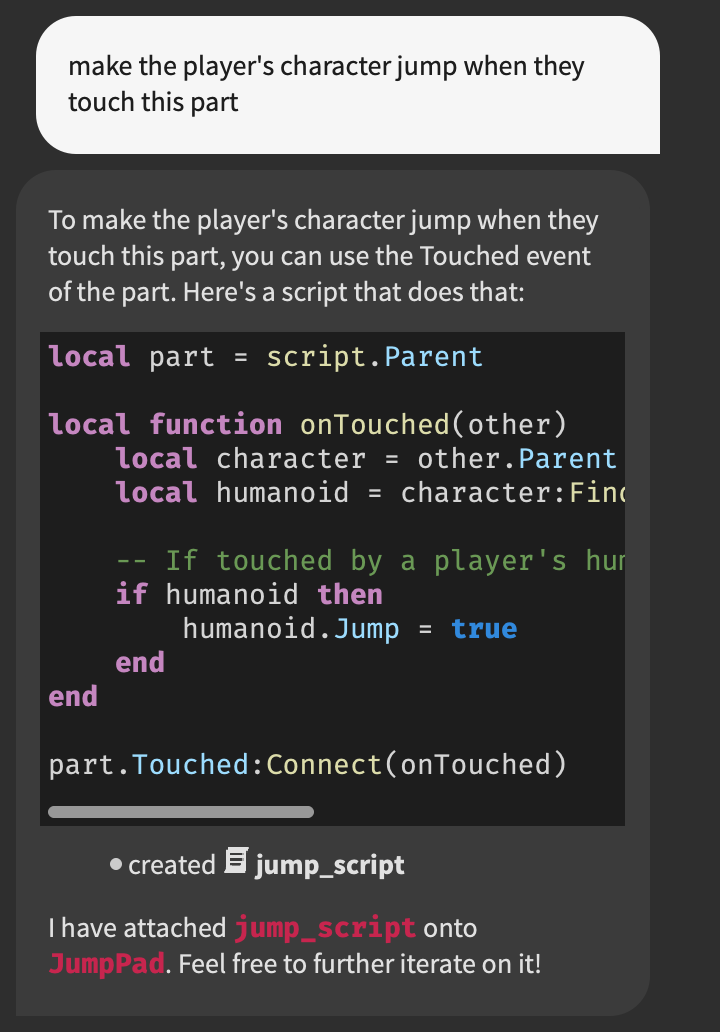

How To Use Require Script In Roblox Mobile PC YouTube Hqdefault . Script Application Roblox Coding Guide To Master Roblox Learn Roblox Scripting Web Copy . Asystent Centrum Tw Rc W Roblox Studio Script Insert . Link Check Results For Roblox Web Shooter Script Physics Pages Dev B02b8a11 39fd 439f 9c7f. What Is A Roblox Script How To Create One Hq720 9 2 1144x644


Velocity Executor Free Roblox Executor 2026 Velocity Logo.webp. Velocity Executor Free Roblox Executor 2026 Velocity Og.webp. Velocity Executor Free Roblox Executor 2026 Velocity. Basically Roblox In 2026 There Cooked 37 Ahuobm L.webp. Link Check Results For Roblox Studio Animation Speed Script Pages Dev 686e2ee8 D47e 4196 83eb




A60 Roblox What Is This Trending Script You Hear About NoFilter. How To Message On Roblox 2026 A Quick Guide SL1500 . Roblox Scripting In 2025 Ep 1 How To Make And Script UI YouTube . 15 Game Roblox Horror Terbaik 2026 15 Game Roblox Horror Terbaik 2026 Paling Seram And Bikin Deg Degan 7f944699ce . How To Enable HTTP Requests ROBLOX YouTube



HTTP 409 Conflict When Opening Roblox Studio From Translate Studio . VPN Roblox Terbaik 2026 Keamanan Dan Akses Tanpa Batas Untuk Pemain VPN Roblox 2026 Terbaik Melindungi Privasi Dan Akses Tanpa Batas 3756ba1bbf . How To Publish A Game On Roblox In 2026 Roblox YouTube . Http Works In Studio Not In The Game Scripting Support Developer . How To Message On Roblox 2026 A Quick Guide



Is Roblox Getting Shut Down In 2026 The Real Truth Behind All Those Is Roblox Getting Shut Down In 2026 1024x683 . 2026 Chat Replica Creations Feedback Developer Forum Roblox 2 690x366 . How To Message On Roblox 2026 A Quick Guide . No Key Blade Ball Scripts For Roblox 2026 TikTok Photomode Zoomcover 480 480 . How To Turn On HTTP Requests In Roblox 9 19 1024x669


3 Total Roblox Drama Scripts ESP Auto Win Voting Insight TNP Scripts 3 Total Roblox Drama Scripts ESP Auto Win Voting Insight 1024x539 . How To Turn On HTTP Requests In Roblox 4 Copy 16 . HttpService Usage Scripting Support Developer Forum Roblox . Prepare For 2026 With Roblox Trends TikTok Img. Roblox Scripting Your Awesome Adventure Starts Here Speed Script Roblox