Ever wondered which video game truly dominates the financial charts, not just in initial sales but across its entire lifespan and diverse revenue streams? For the modern gamer balancing work and life, understanding what video game made the most money offers insights into market trends, smart monetization, and where to find lasting value in gaming. This isn't just about raw numbers; it's about longevity, player engagement, and innovative business models that keep titles relevant for years. From groundbreaking upfront purchases to sophisticated free-to-play ecosystems and the ever-present allure of in-game purchases, the landscape of top-earning games is more complex and fascinating than ever before. We delve into the titans that have shaped the industry, revealing the true financial champions and what makes them tick, helping you stay informed without the hype. Discover the secrets behind their enduring success and how these insights can inform your gaming choices for maximum enjoyment and value.
Q: What video game has earned the most money ever?
A: Grand Theft Auto V (GTA V) is widely considered the highest-earning video game of all time, with cumulative revenues estimated well over $15 billion since its 2013 release. This includes initial game sales, ongoing digital purchases, and particularly robust microtransaction revenue from its online component, GTA Online. Minecraft is another colossal earner, often cited as the best-selling game of all time by units sold, and its marketplace and ongoing sales contribute significantly to its multi-billion dollar revenue.
Q: How do top-grossing video games make money beyond initial purchases?
A: Top-grossing games employ diverse monetization strategies beyond upfront sales. These include microtransactions for cosmetic items, battle passes for seasonal content, downloadable content (DLC) and expansions, subscriptions (especially for online services or MMORPGs), and in-game advertising. Live-service models, where games are continuously updated with new content, are crucial for sustained revenue through these ongoing purchases.
Q: Are mobile games more profitable than console or PC games in 2026?
A: While console and PC games like GTA V generate immense revenue, mobile gaming often leads in overall profitability and market share due to its massive global audience and free-to-play model. Titles like Honor of Kings and Genshin Impact generate billions annually through aggressive microtransaction and gacha systems, attracting millions of daily players who might not own traditional gaming hardware. For many gamers, mobile offers accessible and budget-friendly entertainment.
Q: Why do games like GTA V and Minecraft continue to earn so much years after release?
A: Their sustained revenue comes from evergreen gameplay that appeals to new generations, consistent content updates that keep veteran players engaged, and broad multi-platform availability that ensures a massive audience. Strong community features and social components also turn these games into digital hangouts, fostering loyalty and encouraging ongoing spending on cosmetic items and expansions.
Q: What monetization models are driving current video game revenue trends?
A: Current trends are heavily driven by live-service models, which emphasize ongoing content and community engagement. Battle passes and seasonal content updates encourage regular play and spending, while cross-platform play expands player bases. Microtransactions, especially for cosmetics and character customization, remain central, allowing players to personalize their experience without impacting core gameplay. Cloud gaming subscriptions also offer a new avenue for recurring revenue.
Q: What makes a video game have such a long and profitable lifespan?
A: A long and profitable lifespan for a video game is typically fueled by several factors. These include a highly replayable core gameplay loop, continuous post-launch content updates (DLCs, expansions, seasonal events), strong community features that foster social engagement, successful adaptation to new platforms and technologies, and clever monetization strategies like microtransactions that enhance player experience without being mandatory. Games like Minecraft exemplify this by providing endless creative possibilities.
Q: How do video game revenue figures account for different regions and currencies?
A: Video game revenue figures are typically aggregated globally, converted to a single major currency like the US Dollar for comparison. Companies like data.ai or Newzoo track sales and in-app purchases across various platforms and regions, adjusting for exchange rates and local market conditions. These figures usually encompass digital and physical sales, along with all forms of microtransactions, subscriptions, and other revenue streams, providing a comprehensive financial picture.
As a busy gamer juggling work, family, and life, you probably want to make the most of your limited gaming time and budget. You might wonder, amidst all the new releases and endless discussions, what video game made the most money? It is not just about bragging rights; understanding which games have truly dominated financially can offer a fascinating glimpse into what makes a game successful long-term, where value truly lies, and what trends are shaping our beloved hobby. Forget the hype and marketing blitz; we are diving into the real numbers and the strategies that keep gamers engaged and games profitable for years.
We know that for the average US gamer, around 36 years old and part of the 87% who play regularly, often dedicating 10 plus hours a week, gaming is about relaxation, skill-building, social connections, and value. You want practical solutions: good game recommendations for limited time, performance tips, or smart ways to upgrade hardware on a budget. This guide will cut through the noise, providing clear answers about the financial champions of the gaming world, helping you understand the real dynamics behind the industry's biggest earners and how that knowledge can benefit your gaming journey.
What video game made the most money globally?
When we talk about what video game made the most money, two titles consistently stand out at the absolute peak: Grand Theft Auto V (GTA V) and Minecraft. While exact, real-time figures are notoriously hard to pin down and fluctuate with ongoing sales and microtransactions, these two behemoths have cumulatively generated well over 10 billion dollars each, and in some reports, estimates for GTA V alone push past 15 billion. Their success isn't just about initial sales; it is a testament to incredible longevity, constant player engagement, and diversified revenue streams.
GTA V, initially released in 2013, has sold over 195 million copies across multiple generations of consoles and PC. Its online component, GTA Online, has been a massive cash cow, with continuous updates, seasonal content, and shark card microtransactions providing a steady flow of income for over a decade. Minecraft, on the other hand, boasts over 300 million copies sold and continues to attract millions of players with its creative sandbox gameplay, merchandise, and marketplace purchases. Both games have successfully evolved beyond their initial launch, proving that sustained content and community are critical to monumental financial success.
How do video games actually make money beyond initial sales?
For most modern games, the old model of just selling a copy and being done with it is largely outdated for top earners. The biggest money makers employ sophisticated, multi-faceted monetization strategies that keep revenue flowing long after launch. These methods are designed to engage players continuously and offer optional purchases that enhance their experience without typically being mandatory for core gameplay.
Key revenue drivers include:
Microtransactions: These are small, in-game purchases for cosmetic items (skins, emotes), virtual currency, loot boxes, or time-saving boosts. Games like Fortnite, Call of Duty, and Genshin Impact have perfected this model.
Expansions and DLC: Larger content packs that add new stories, characters, maps, or game modes. While not microtransactions, they represent significant post-launch purchases for many players.
Seasonal Passes and Battle Passes: Common in live-service games, these offer tiered rewards over a set period, encouraging regular play and upfront purchase for access to premium tiers.
Subscriptions: Some games, particularly MMORPGs like World of Warcraft or services like Xbox Game Pass and PlayStation Plus, operate on a recurring subscription model, providing consistent income.
Advertising: Especially prevalent in mobile free-to-play games, where ads are shown to players unless they pay to remove them.
Merchandise and Licensing: Beyond the game itself, successful franchises generate substantial revenue from toys, apparel, movies, and other licensed products.
Understanding these models helps gamers like us identify where our money goes and why some games maintain profitability for so long. It also helps in making smart purchasing decisions, prioritizing value for our time and money.
Why are older games still topping revenue charts in 2026?
It might seem counterintuitive, but many of the games that have made the most money are not recent releases. Titles like GTA V and Minecraft, over a decade old, consistently outperform many newer games in cumulative earnings. This enduring success is largely due to a combination of factors that resonate strongly with the average gamer.
First, their **broad appeal and evergreen gameplay** mean they attract new players constantly. Minecraft's creative freedom and GTA V's open-world escapism offer experiences that do not necessarily age. Second, **multi-platform releases and re-releases** ensure accessibility across generations of hardware, from PC to mobile and multiple console iterations. Third, **sustained content updates and live-service models** keep existing players engaged and spending. For example, GTA Online continues to receive major expansions that feel like new games themselves. Finally, **strong community and social features** turn these games into digital hangouts, fostering loyalty and driving organic growth. For gamers with limited time, investing in a game with a proven track record and active community offers reliable fun and value.
Is free-to-play gaming the future of high earnings?
Absolutely, free-to-play (F2P) gaming has cemented its place as a dominant force in the industry's financial landscape, especially in 2026. While premium games like GTA V generate immense wealth through sales, F2P titles, particularly on mobile, often surpass them in sheer daily or monthly revenue. Games like Honor of Kings, Genshin Impact, and Fortnite exemplify this model. They remove the upfront barrier to entry, inviting millions to play, and then monetize through optional purchases like cosmetics, battle passes, and gacha mechanics.
For gamers balancing life, F2P games offer incredible accessibility. You can jump in, enjoy the core experience, and decide if and when you want to spend money. This model thrives on **high player volume, deep engagement, and psychological triggers** that encourage spending on personalization or progression. While some criticize aggressive monetization, the success of F2P is undeniable, aligning with current trends where mobile gaming dominates a significant portion of the US gamer base and cross-play allows seamless interaction, further boosting engagement and potential revenue.
What role do microtransactions play in game revenue?
Microtransactions are the backbone of revenue for many of the games that made the most money today. These small, often cosmetic, purchases are designed to personalize a player's experience or offer minor conveniences. While some microtransactions can feel predatory, especially those tied to
Grand Theft Auto V and Minecraft consistently rank as top earners due to massive sales and ongoing content monetization. Mobile gaming, particularly titles like Honor of Kings and Genshin Impact, generate substantial revenue through free-to-play models and microtransactions. Live service games with seasonal passes and cosmetic items drive continuous income long after initial release. The top-grossing games showcase diverse revenue strategies from premium sales to deep in-app purchases and subscriptions.
35


These 10 New Games Made The Most Money In 2026 March 2026 Console Revenues . These 10 New Games Made The Most Money In 2026 March 2026 PC Revenues . These 10 New Games Made The Most Money In 2026 Newzoo Top 10 Games By Revenue Jan March 2026 . Video Game Statistics 2026 Video Game Statistics 2026 . Top 10 Most Anticipated Games Of 2026 What To Watch Out For TVN GAMES IN 2026
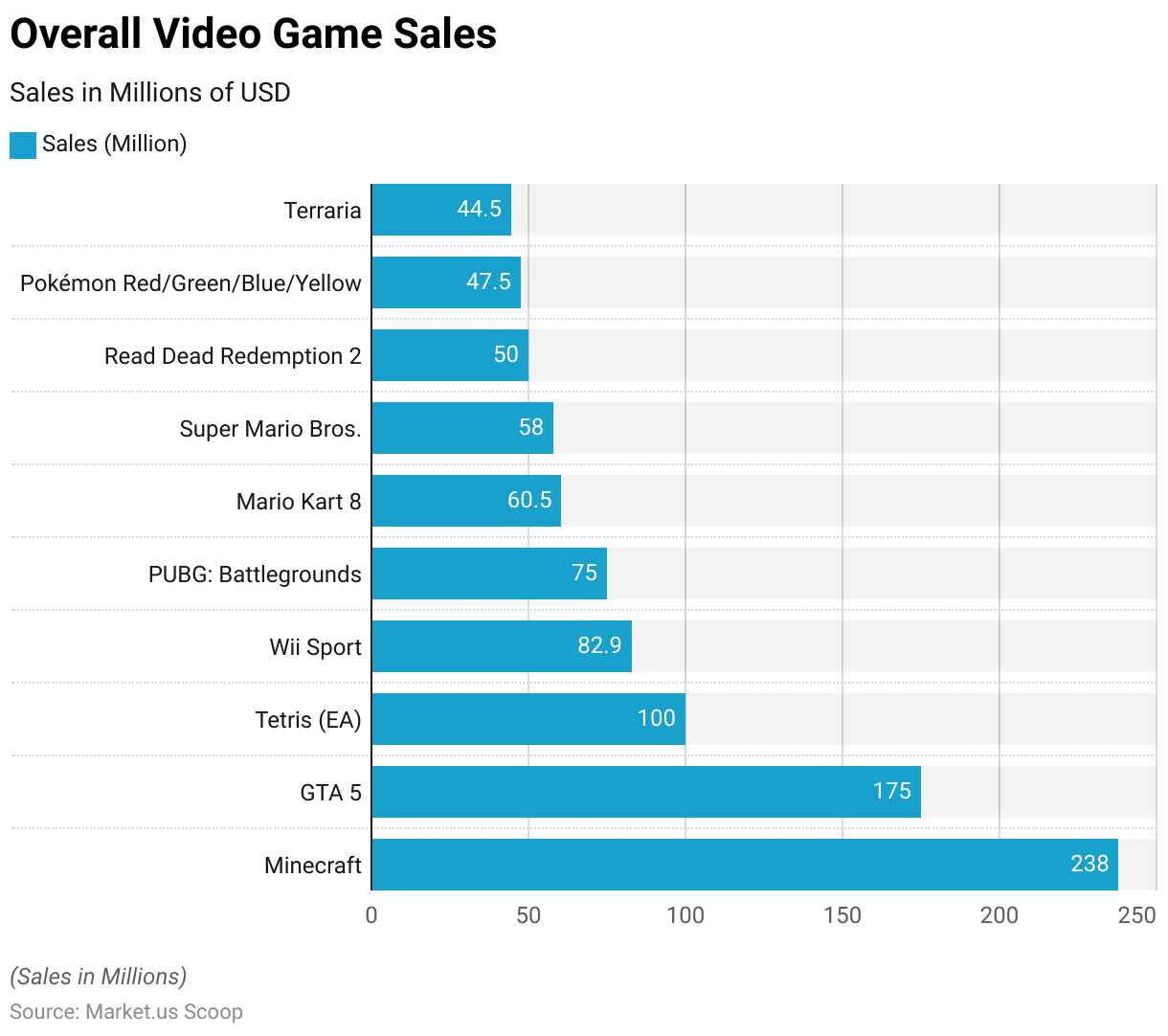
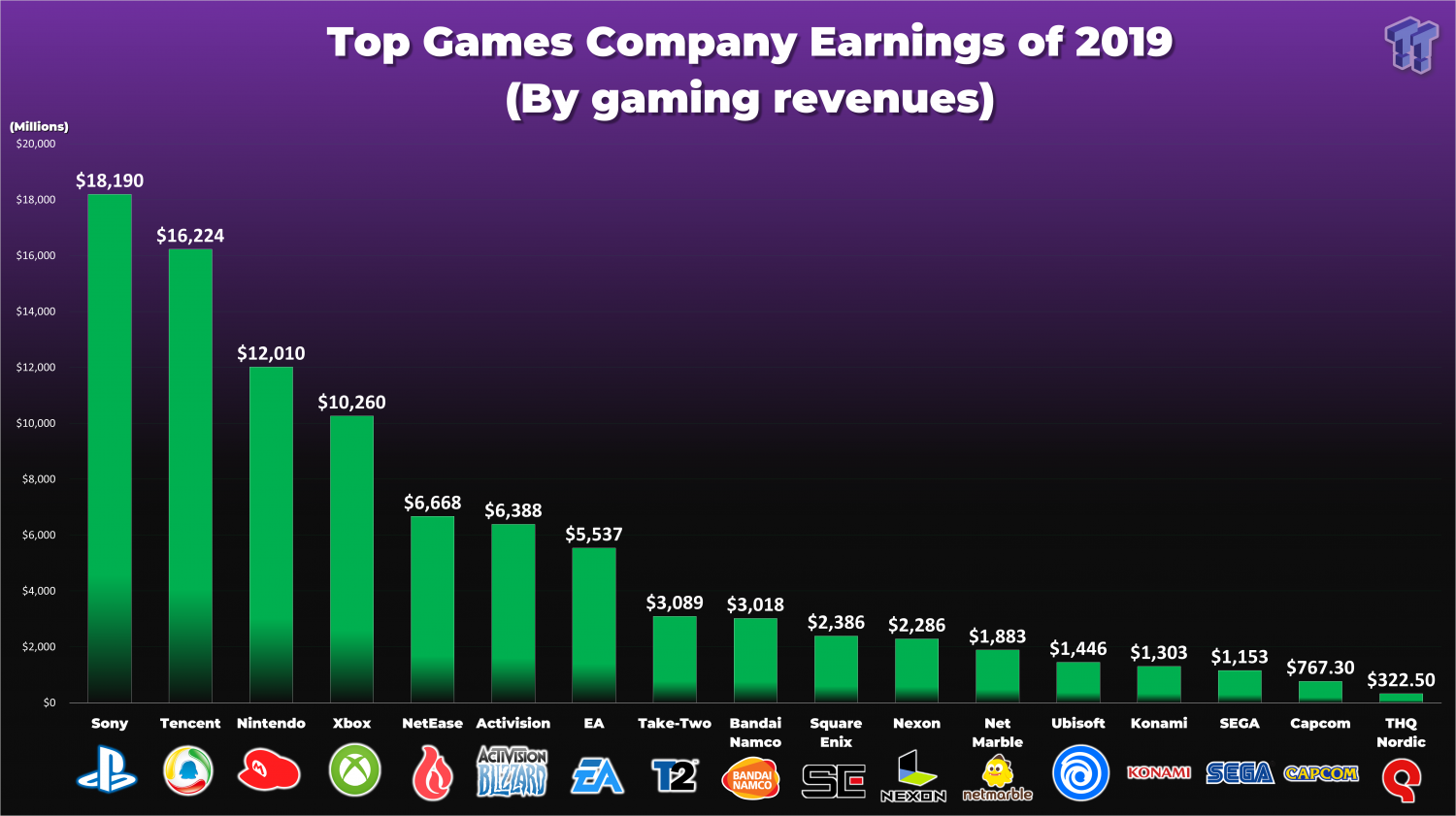

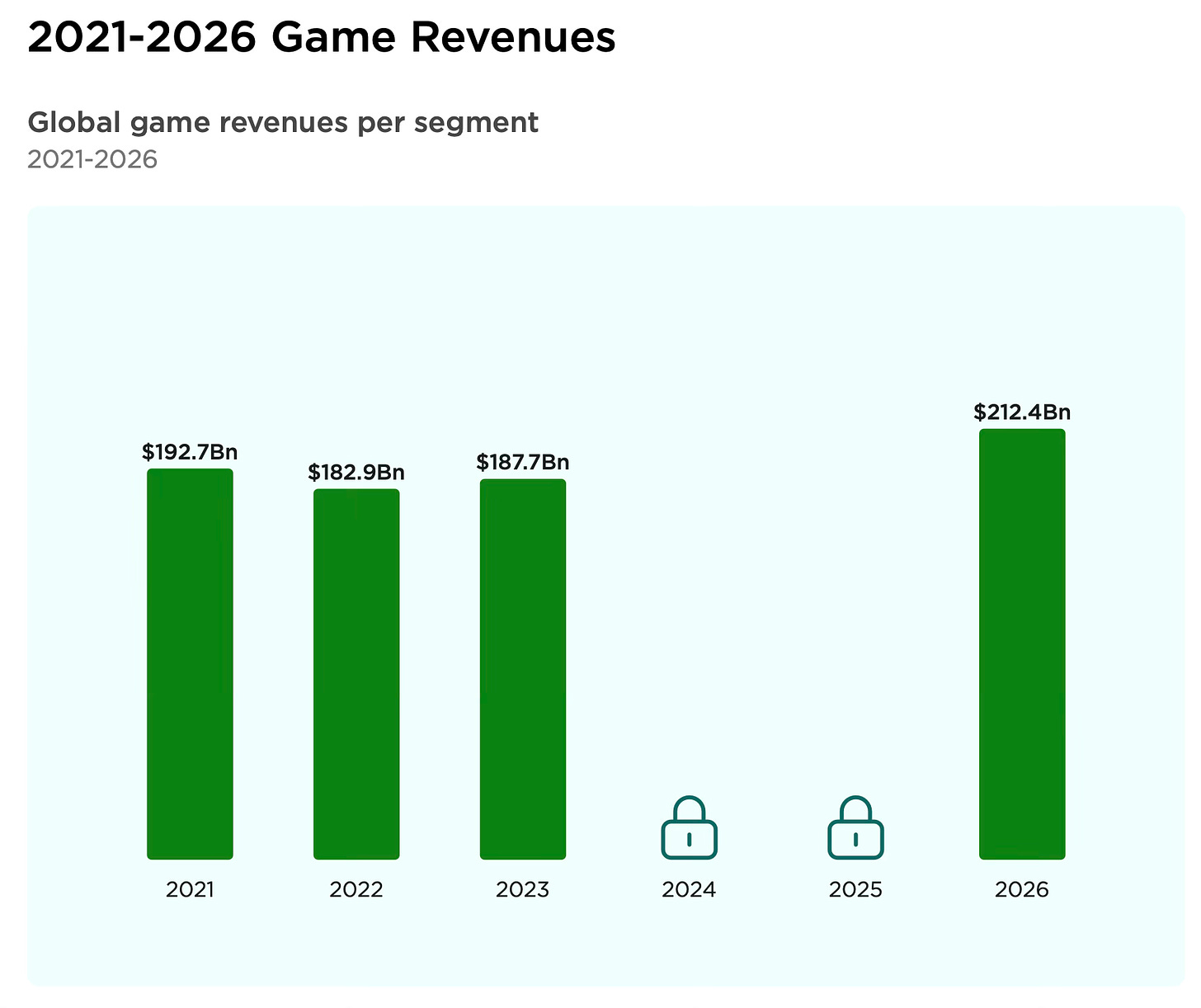
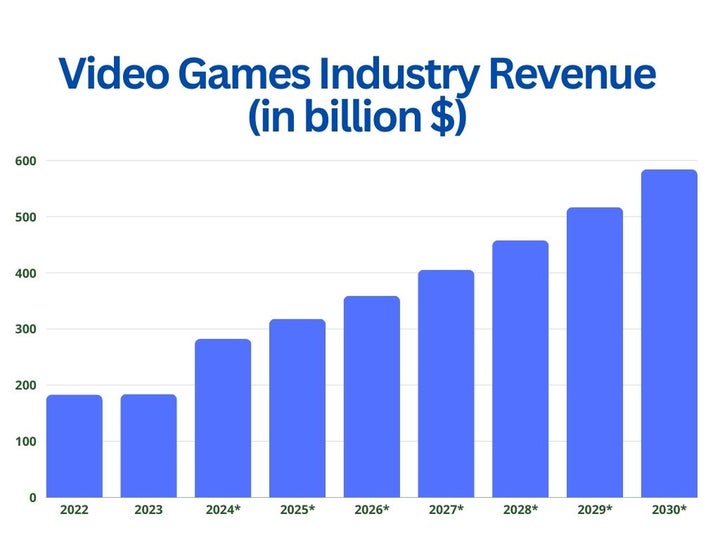
Video Games Statistics And Facts 2026 Overall Video Game Sales . 2019 S Top Earning Video Game Companies Sony Conquers The Charts 72703 34 2019s Top Earning Video Game Companies Sony Conquers The Charts Full . 20 Most Anticipated Video Games Of 2026 Page 10 1200x675 . Devtodev Game Market Overview The Most Important Reports Published 69 Global Game Market Revenue 2026 . Video Game Industry Statistics 2024 An In Depth Analysis Of Growth VG Industry Revenue
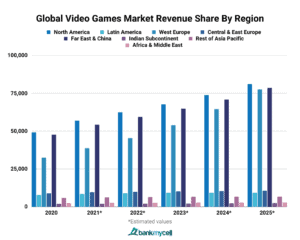




Video Game Industry Revenue Market Share 2026 S29 6 Video Game Revenue By Region 300x240 . Top 10 Most Anticipated Video Games Of 2026 Cloud3D 00 Featured Image 1116 628 . The 10 Most Anticipated Video Games Of 2026 9cd7df98 C7be 4379 9340 16 9 Aspect Ratio Default 0 . Video Games 2026 Key Trends Shaping The Future Of Play Mavigadget Blog . Highest Selling Video Game Online
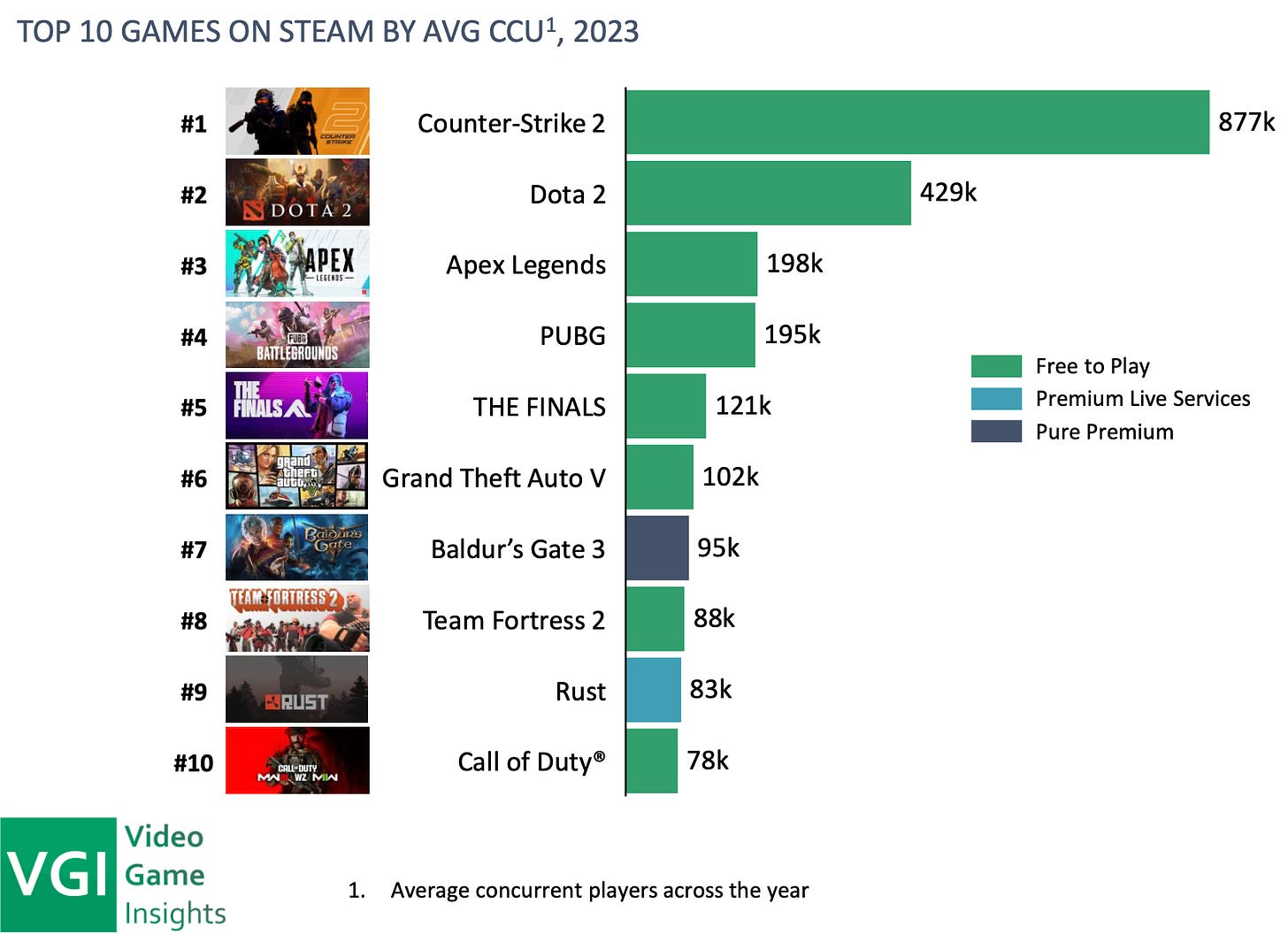


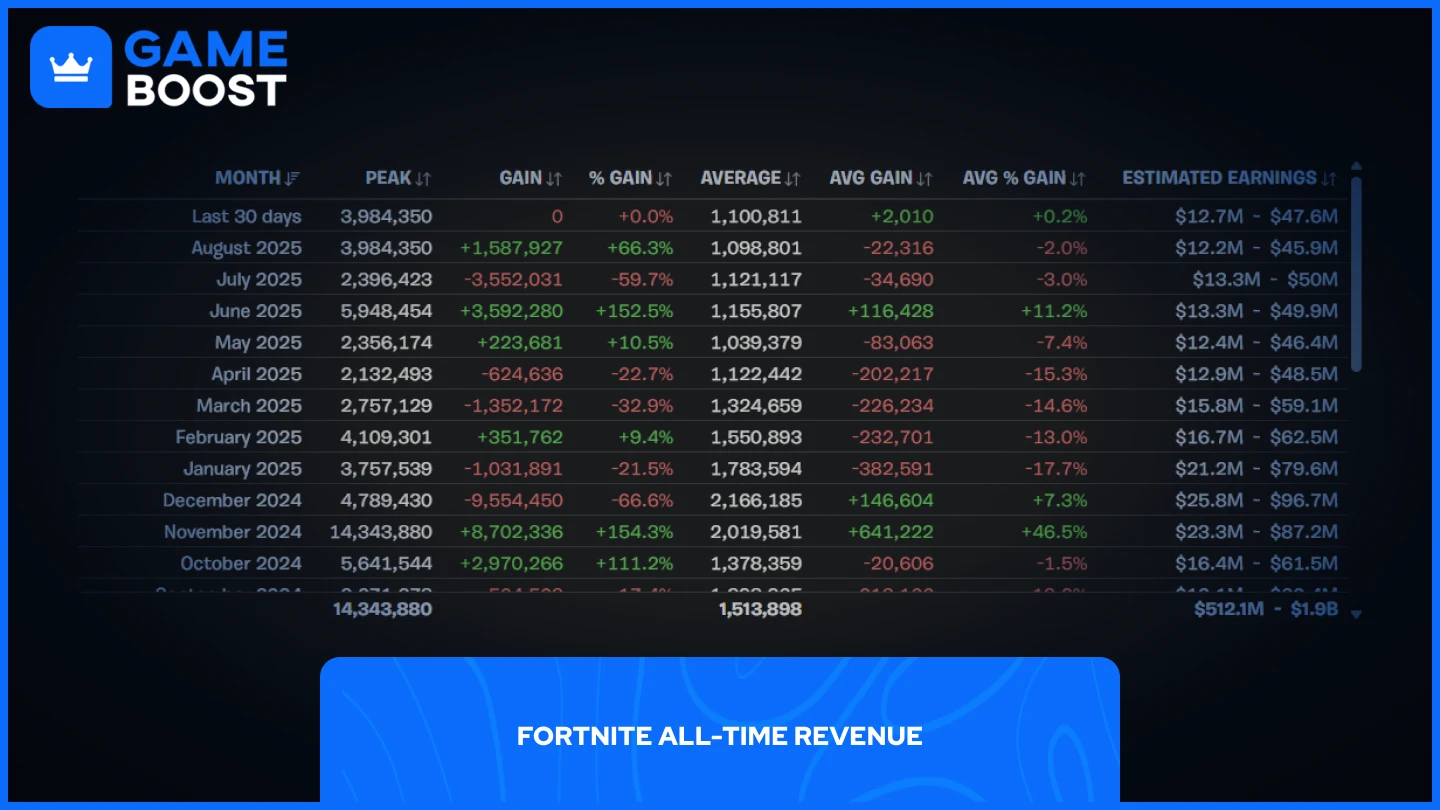
Game Market Overview The Most Important Reports Published In April 2024 2 Top 10 Games On Steam By Avg Ccu . Finally A Top 10 Worth 1N The Highest Earning Games In The World Highest Earning Games January 2025 . Global Games Industry Will Reach USD 236 9 Billion In 2026 Gaming And Video Games Money . Circana U S Gamer Report 2024 71 Of U S Consumers Play Video Games Global Games Market Revenues In 2024 By Segment . How Much Money Has Fortnite Made All Time Stats 6a669cb5 580b 4502 8a11
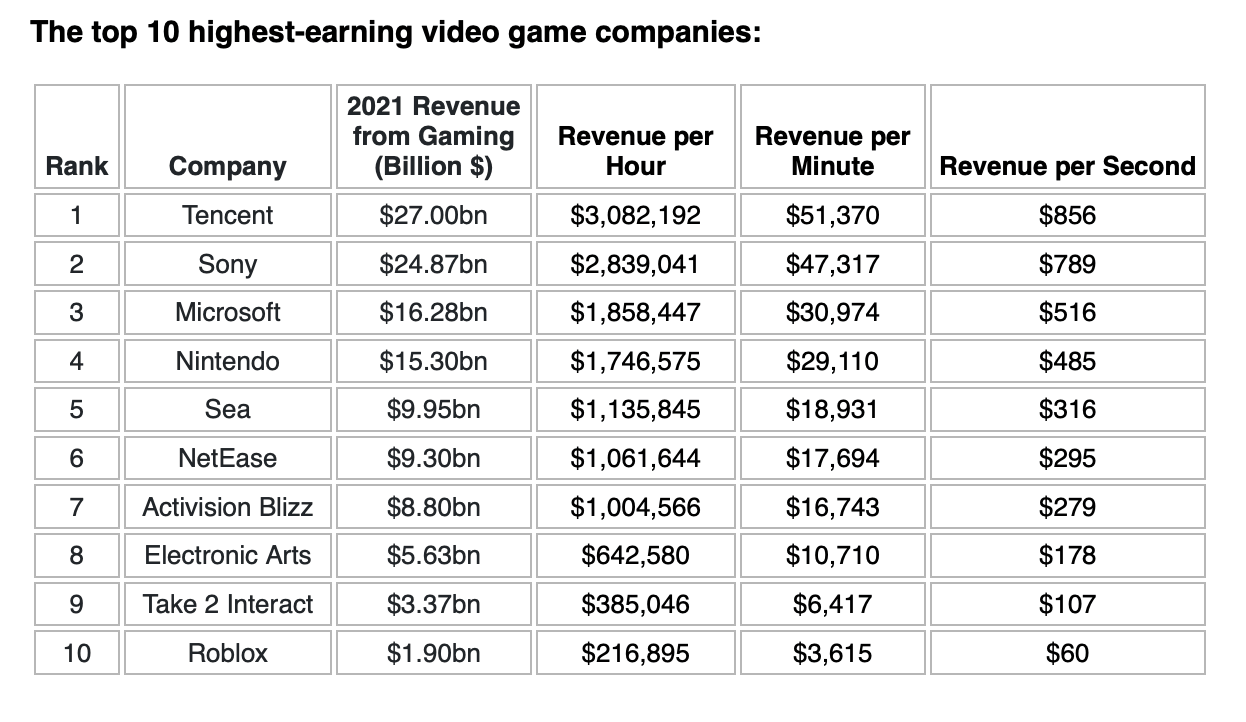
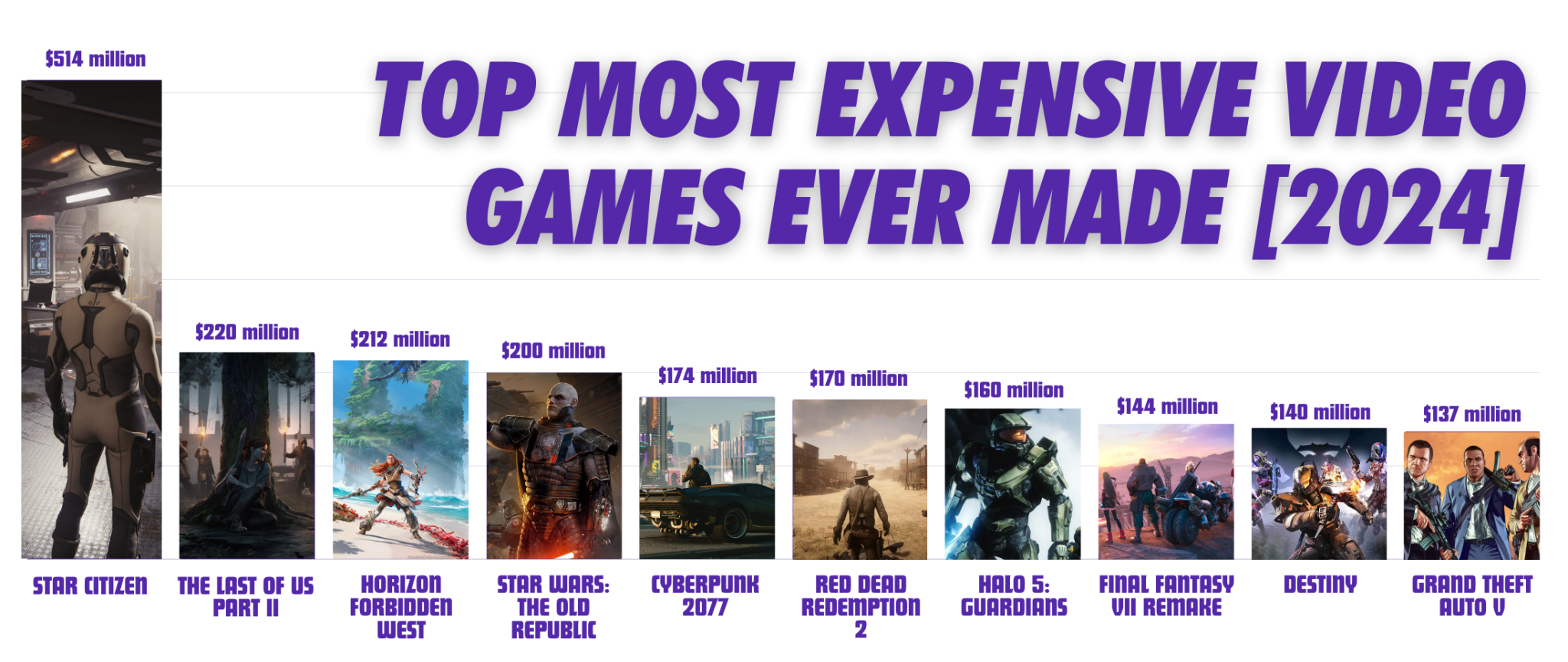
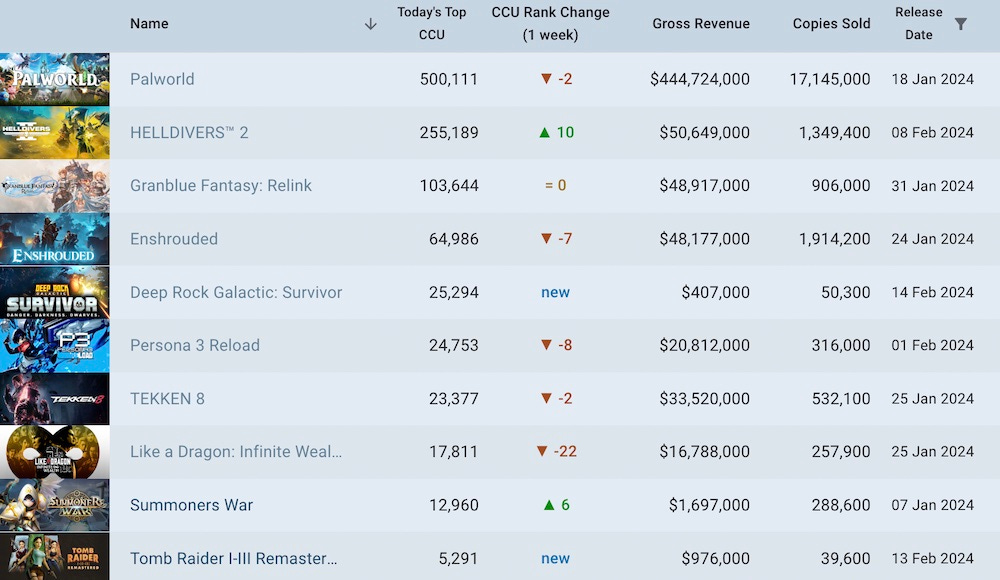

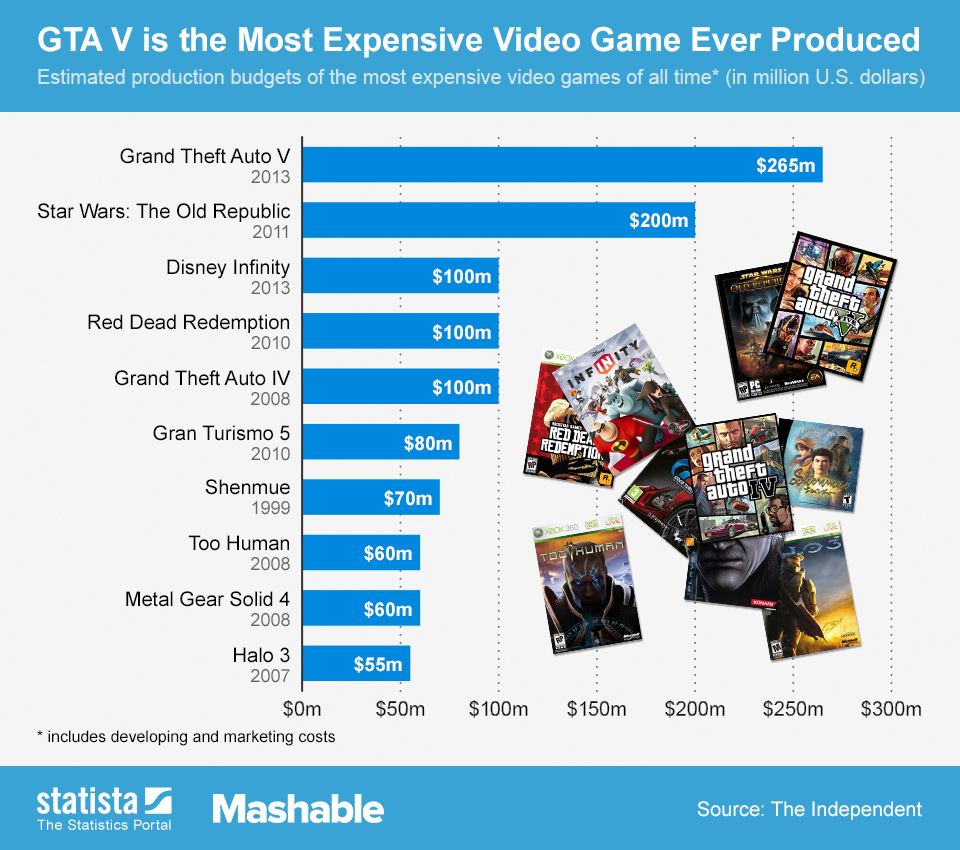
Top Video Game Companies Earn Over 3M Per Hour Just How Big Is The Screen Shot 2022 10 18 At 10.24.48 AM . Top Most Expensive Video Games Ever Made 2024 145 Diagram 2048x864 . Plus Which New In 2024 Games Are People Still Playing 22a29da2 632d 45eb 8566 1000x580 . Top 10 Unreal Engine Games Of 2025 Upcoming 2026 Releases Top Ue Games 2026 Cover Scaled . Chart GTA V Is The Most Expensive Video Game Ever Produced Statista 1466
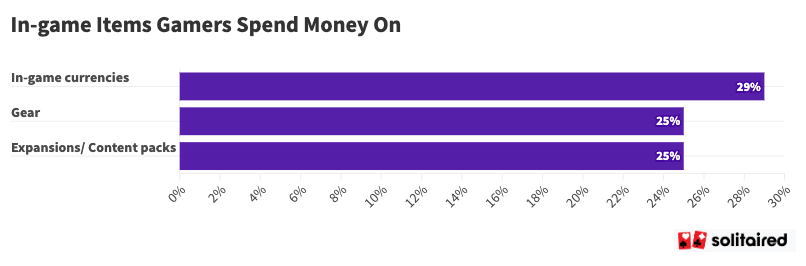




60 Gaming Statistics To Know In 2024 Solitaired Img . Premium Photo Video Game Industry Wealth Gamepads Surrounded By Money Video Game Industry Wealth Gamepads Surrounded By Money Success 763042 6893 . Download 2026 New Year 4k Market 2026 2026 3d Digits Thumb2 2026 New Year 4k Market 2026 2026 3d Digits Made From Metal Bitcoin Golden Coin . The Top Games To Play In February 2026 FullCleared Fullcleared Most Anticipated Games Of 2026 1536x864 . These Christmas Songs Most Likely To Tank At Work Study 2026 Money

Video Game Industry Statistics 2024 An In Depth Analysis Of Growth Top Selling Revenue . The Most Anticipated Upcoming Video Games Of 2026 Green Man Gaming Blog . Devtodev Game Market Overview The Most Important Reports Published Gamedev Jan 2025 70 . How To Make Money Playing Video Games In 2026 6 Real Ways How To Make Money Playing Video Games . What The Video Games Market Looks Like In 2024 ECDB Video Game Market Revenue Worldwide 2019 2026 12157